Feeds:
Posts
Comments

A Tale of Two Spinners

First of all, I have my new camera and am back in action in the picture-taking department.  It is a Panasonic Lumix DMC-ZS7, and as usual I did my research on the Digital Camera Resource Page website.  I have always found his in-depth reviews to be very helpful.  Read the review of my specific camera here (I went with the blue color, not that it makes any difference).

On our way down to Sacramento in early October, we stopped in Chico, CA for lunch.  There was an antique mall where we parked the truck and trailer, so of course we went on in.  Rick spotted a forlorn object in a corner and pointed it out to me – an Indian head spinner!  These are used to spin thick yarns such as those used for Cowichan Indian sweaters.  I inquired about it, but it was on consignment and no agreement could be reached, and we didn’t have room in the truck for it anyway.

Cut to the return trip north.  We stop in Chico again and go back to the antique mall.  Rick checked it over and said it could be fixed up.  It is not a true antique, but he thinks it was handmade (not manufactured) and may be 40-50 years old or more (based on some of the turned wood parts, like large screws).  We found out why it was so dirty.  The antique mall had an arson fire a year ago and a lot of things were covered in soot.  They hadn’t even bothered to clean it off after a year!  Well anyway, I made my offer, we loaded it into the truck and brought it home, and here is a picture before cleaning and restoration work begin, hopefully this winter.  Then I will spin some yarn for a Cowichan sweater.

What’s in the bag?
My new HansenCrafts electronic minispinner!

I ordered it 4 weeks ago from the HansenCrafts website.  Since I was going to be out in Port Townsend last weekend anyway, for my annual knitting-spinning-eating-laughing-walking etc event, and they are made nearby in Chimacum, WA, I arranged for a field trip to pick it up in person from Kevin Hansen.  Since I was without camera, my friend Rebecca took some and has given permission to use some of them:
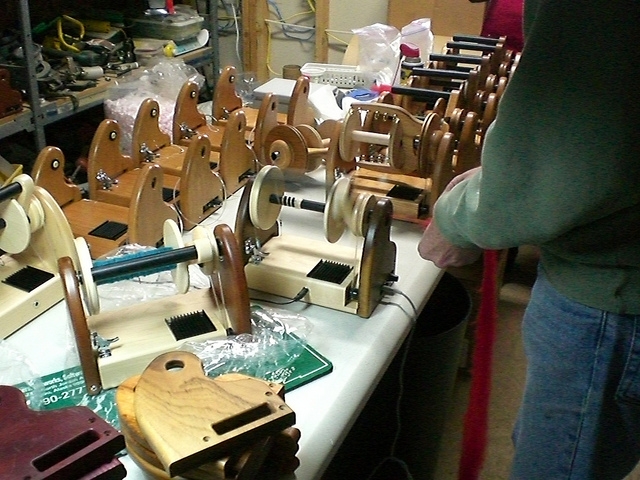
test spinning at HansenCrafts

Kevin and his wife Beth had just come back from two shows (SOAR – Spin-Off Autumn Retreat – and the New York State Sheep & Wool festival at Rhinebeck, NY) and he had about 30 of these babies to ship out.

Here is Rebecca trying out the walnut and maple minispinner that somehow wound up going home with her and her sister Peggy:

They only started serious production on these in the last year, and have been overwhelmingly successful.  There is even a Ravelry group devoted to the HansenCrafts minispinner (I think you may have to join Ravelry to see this page, but am not sure).

I ordered mine in bubinga, an African hardwood.  No, it won’t spin any better than the standard maple or cherry versions, but I decided to splurge on beauty and uniqueness.  Kevin said the specialty woods are denser and the unit a little heavier, which can give it some extra stability when the bobbin gets full.  I don’t know which I am more in love with, the minispinner itself  or the WooLee Winder.  I haven’t had a WooLee Winder before – you don’t have to keep stopping to move the yarn from hook to hook on the flyer, or slide the thread guide along, depending on the style of your wheel.  This will be especially useful for plying, where both of your hands are full anyway and stopping to slide the yarn along the flyer is a real pain.  On the minispinner, it is a jumbo bobbin and will hold a lot more than the standard WooLee Winder bobbins that you can order for many brands of spinning wheels.

I did get one extra bobbin, and I think that will be enough.  I usually wind off my spun singles onto storage bobbins anyway (the Leclerc plastic ones used for sectional warping on a loom) – a tip from Judith MacKenzie.  And when plying, I will just be winding the plied yarn off onto a niddy-noddy or skeiner.  So one bobbin for whatever singles I am working on, and one bobbin for plying – that’s the theory.

Beautiful bubinga minispinner

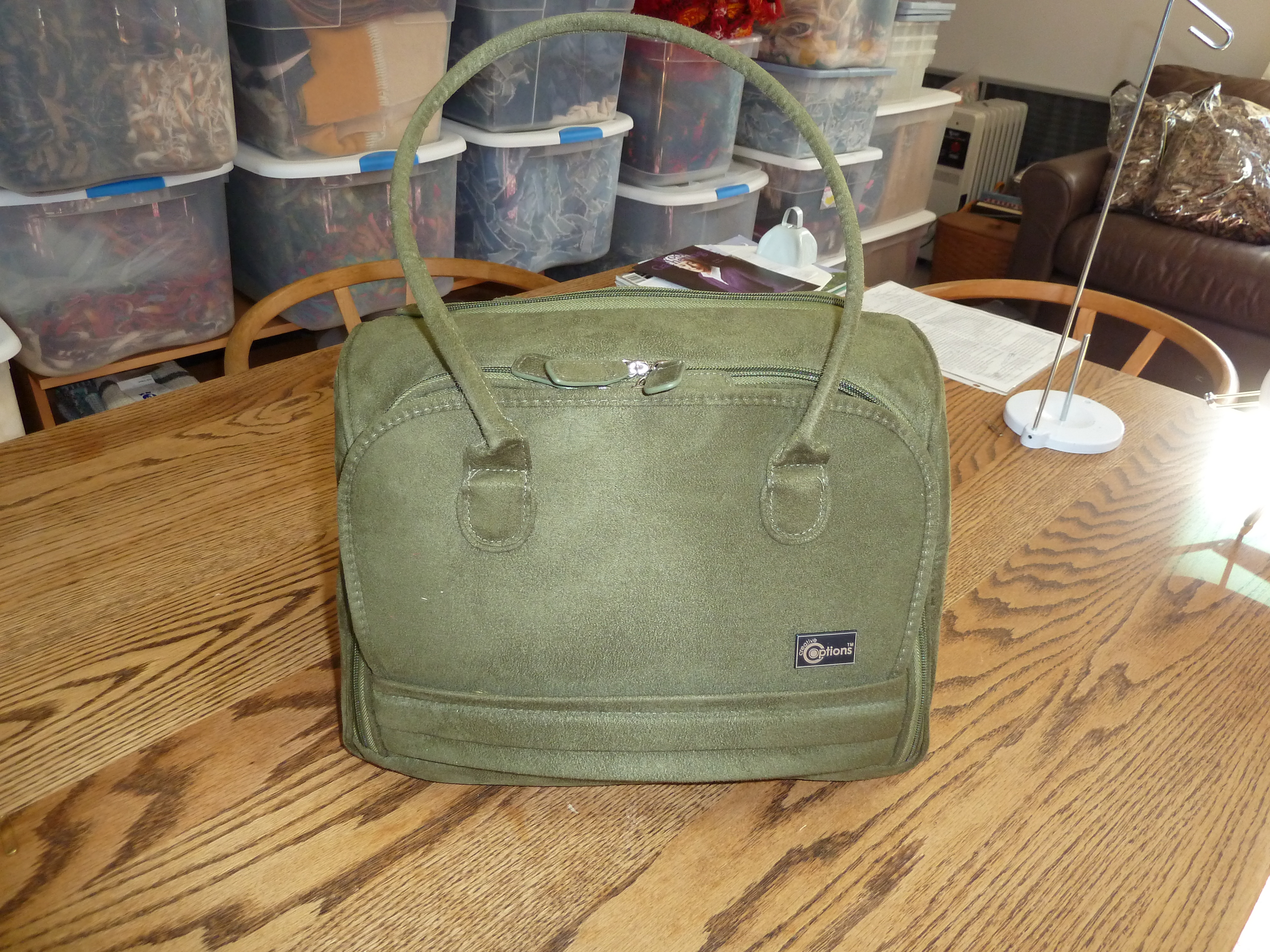
It comes in a nice little hemp tote bag with the HansenCrafts logo on it, but I knew I wanted to get something that would protect it better.  On the way home from Port Townsend, we stopped in Port Gamble to visit The Artful Ewe and the new quilting shop there, Quilted Strait.  That’s where I found the green tote bag, just the right size for the little spinner and its accessories, plus room for some spinning fiber on one side of the internal divider.  I can’t fit the extra bobbin in, but that’s OK.

Farewell to Benson Creek

With closing only 2 days away, I guess it is safe to say we have sold our first home in the Methow, down at Benson Creek.  We know and like the buyers, and it will be good to move on and not have the responsibility of maintaining the other property, especially over the winter.  It’s a little bittersweet, though.  We were quite happy there, but it was just too cramped a living space (although the shop space was great for Rick) and we were losing our enthusiasm for building a separate house on the property, which was the original plan when we bought it in 2003.

So onward!  We love our new home on Wolf Creek, it is just as if it was built for us.  And all we have to do is finish some things up, not go through the whole building process.  Rick finally has the new shop all set up and he thinks it will have a better work flow and be plenty big enough.  Of course, you all know how much I love my studio – I still can’t get over the fact that I actually have a work space of my own!

I dropped my camera before leaving for Seattle, and when I tried to use it over the weekend, discovered everything is working except the shutter button.  Won’t take a picture – no how, no way.  A blogger without a camera is like:

  1. a fish without a bicycle?
  2. a weaver without a loom?
  3. a cat without a clue?

Anyway, my new camera is on the way but won’t be here until next week.  I am off to knitting retreat on Wednesday, so I guess I won’t be chronicling the event this year, at least not in pictures.

Have Weaving Will Travel

I am off to Seattle today, to attend the Seattle Weavers’ Guild meeting and participate in the 30th Annual Show & Sale.  I have put a link in my sidebar, as well.  It takes place this week, Oct 28-30 in Bloedel Hall of St Mark’s Cathedral.

I am amazed at how much time it took to inventory everything, create and attach tags, etc.  And I don’t even have that much stuff – a variety of shawls, rag rugs and my new plaited twill scarves.

I will be helping out at the sale on Friday Oct 29th – hope to see a few friendly faces there!

A Real Gem!

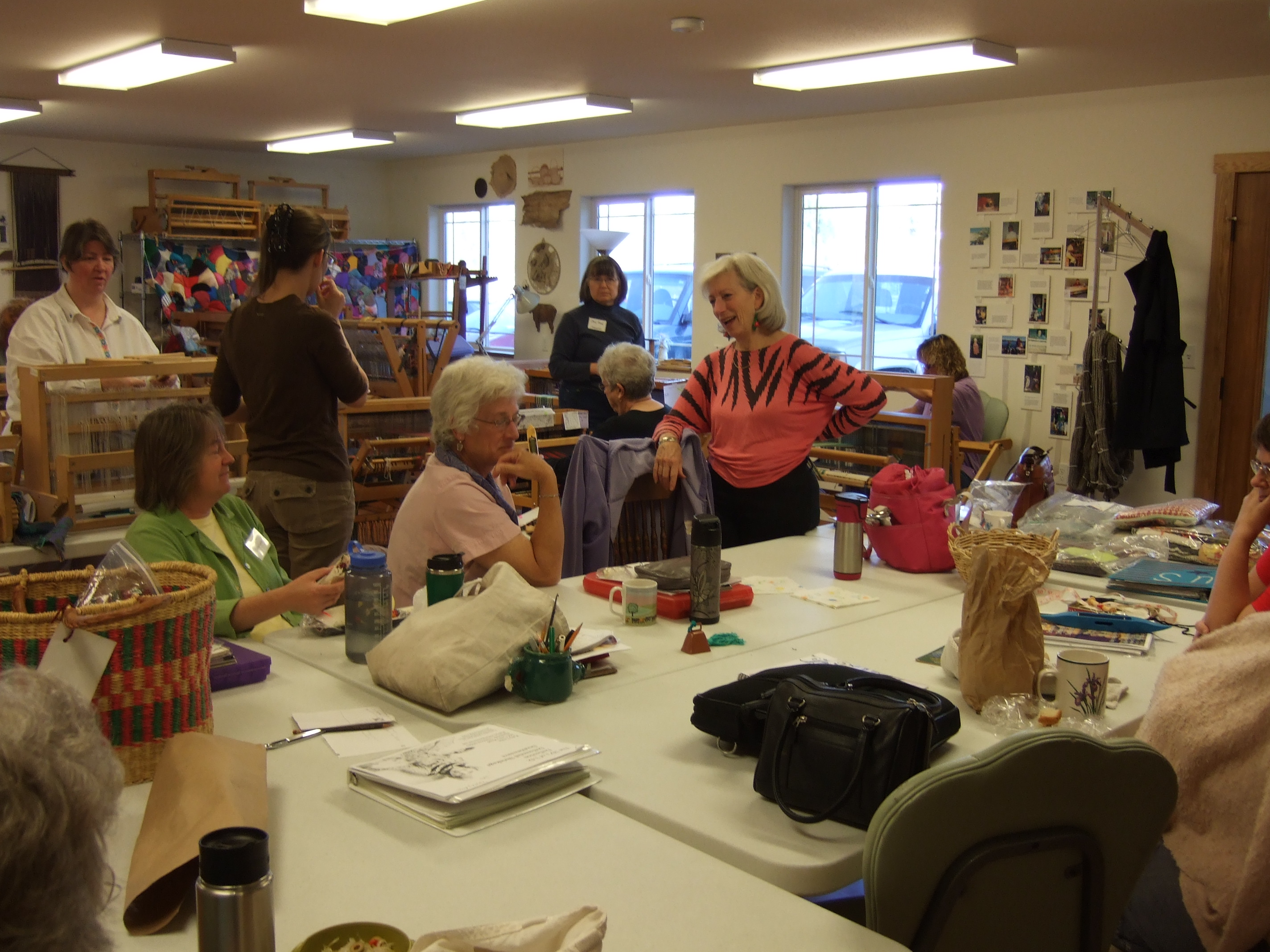
Blogging is lagging behind actual events these days, but I am trying to keep on top of it!  Right after we got back from our road trip, I plunged into a 3-day workshop at my local guild’s room (Methow Valley Spinners and Weavers).  That was the weekend before last.

And what a grand time we all had!  We were lucky to get Ruby Leslie from Vermont to teach us her workshop titled “The 3D’s of 3-D: Deflection, Differential Shrinkage & Doubleweave.”  It was all about how to get texture into our weaving, but it being Ruby Leslie, there was also a lot of color!

Ruby with 2 sides of the deflected doubleweave sample

It was taught in a round-robin format, which means each of us warped and prepared a loom for one of the samples, wove the initial sample, and then over the 3 days everyone got a chance to weave all the other samples on the other people’s looms.  This was the first time I have participated in a round-robin, but it went very smoothly and we were all done by the morning of the 3rd day, leaving time for cutting the samples off the loom and a wrap-up.

Ruby was extremely organized and a great teacher.  She had wound our warps for us and sent them ahead of time with very explicit instructions.  The workshop handouts were also well-organized, with lots of information packed into them, but she went over everything very thoroughly, so together with the actual samples we have all the information to move forward with any of the weave structures we explored.  Some of the weave structures were set up on 2 looms (perhaps with some minor variations) which helped avoid bottlenecks as we moved through all the weaving.  I can’t recommend her highly enough as a teacher and all-around great person to be with.

Ruby was the keynote speaker at the ANWG conference in Spokane in 2009 (Association of Northwest Weavers Guilds biannual conference), where she also taught a 3-day workshop called “There Must Be 50 Ways to Use Your Color.”  I blogged about it back then: my half-day class, and her samples in the classroom.  I still hope to take that workshop some day!

Random Road Trip Notes

We have returned from a road trip with our little camping trailer, down to Sacramento and back for a family wedding.  It was great to get away for a while, see some sights (even though we had to keep moving each day) and have what amounted to a family reunion down in Sacramento.

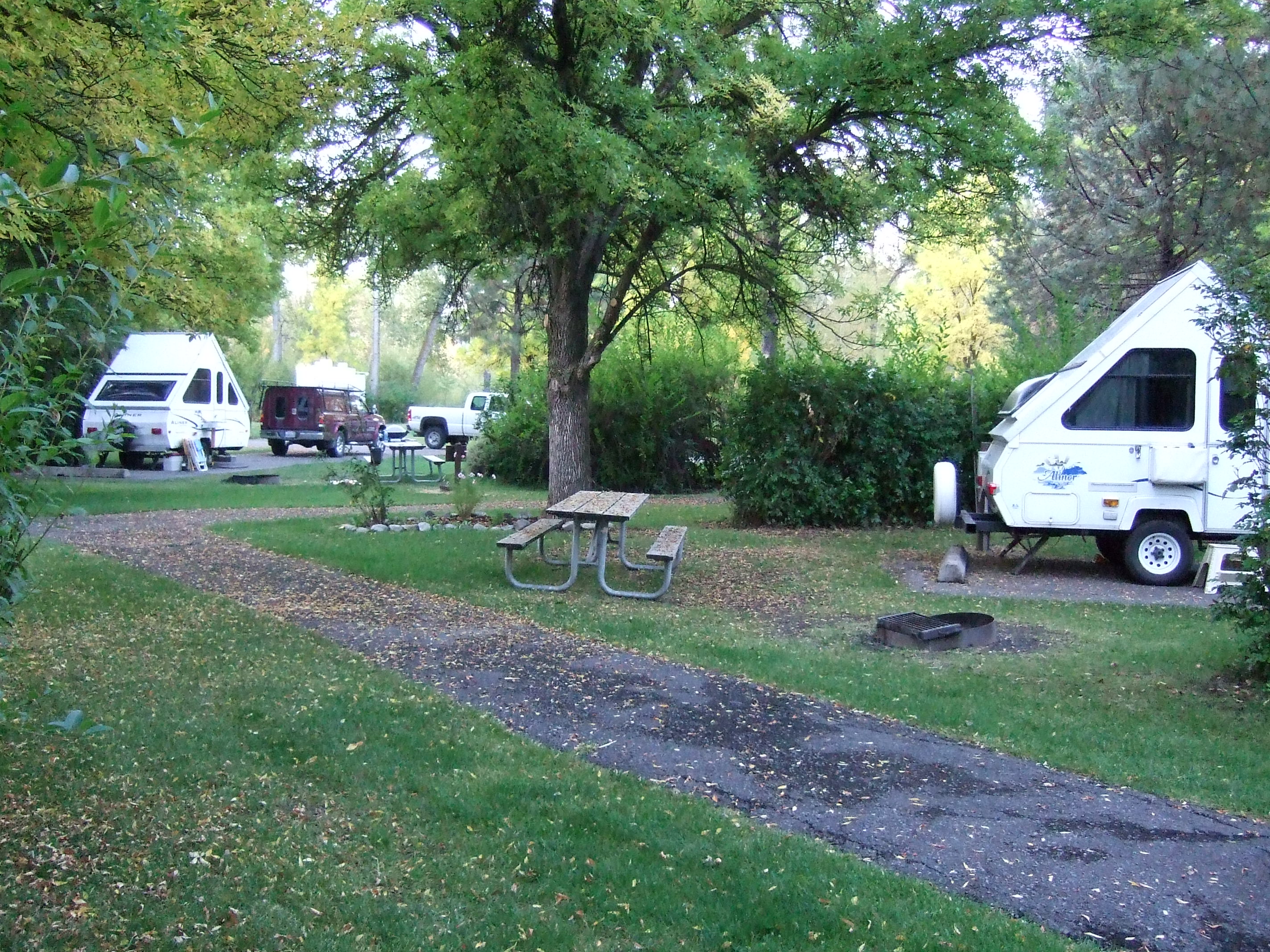
Near John Day, Oregon (southeast Oregon) we pulled into a state park, circled the loop to find a spot, and spotted another Aliner trailer.  So of course we decided to camp in the adjacent spot.  After we set up, I walked over and realized it had Florida plates.  Gosh, didn’t the guy we met at Capitol Reef National Park in Utah (back in 2007) come from Florida?  The one who gave us the grand tour of his Aliner and more or less sold us on the idea?  And didn’t he tow his trailer with a Jeep Cherokee…HEY, this guy has a Jeep Cherokee the same color!!  It’s the same guy!!

Aliners at Clyde Holliday SP near John Day, OR

That’s us on the left, Jack’s rig on the right.  He is a retired schoolteacher and travels the country for months and months at a time, doing a lot of digital photography.  We had a nice visit and all marveled at what a small world it is.

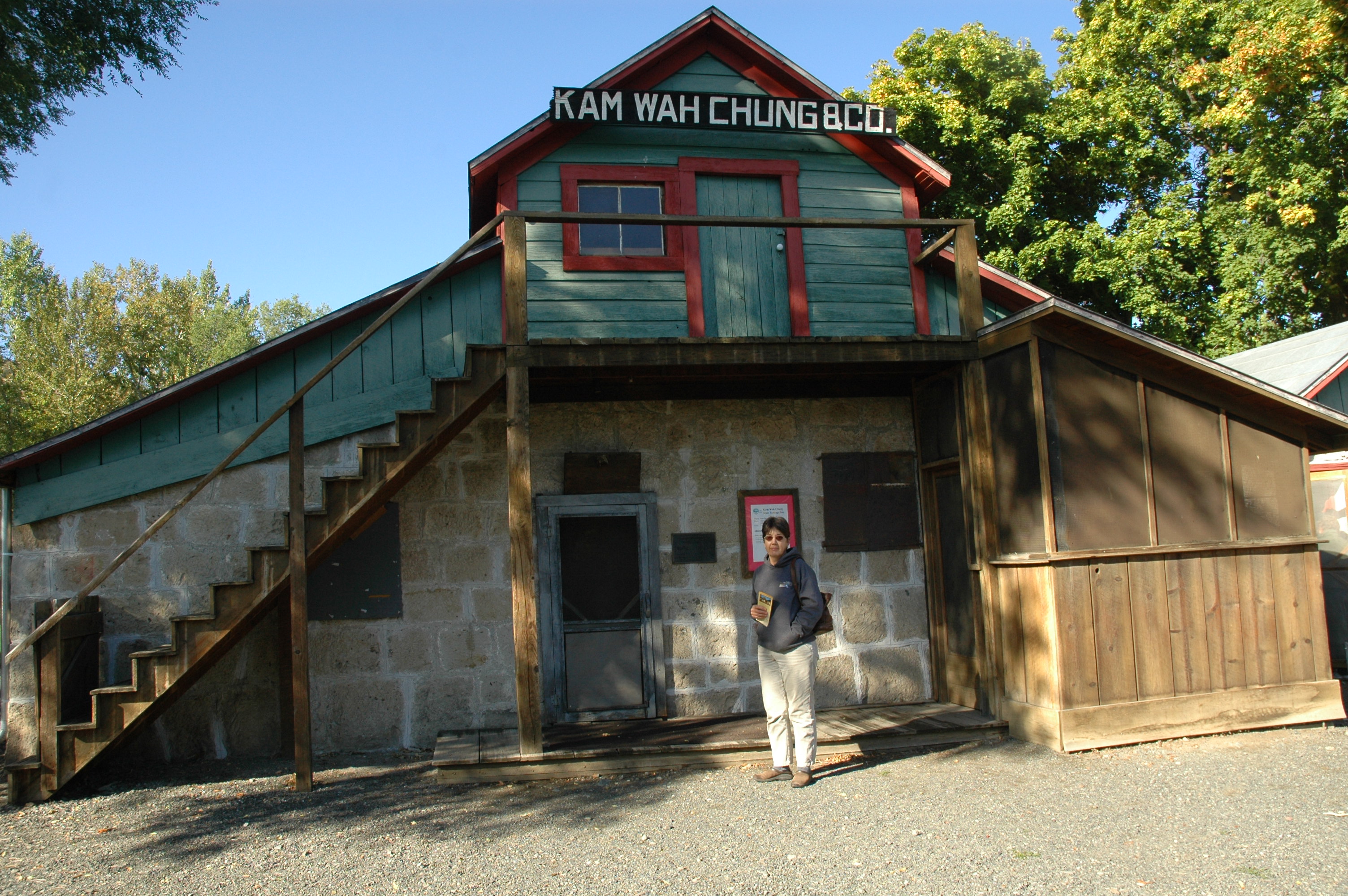
Also in John Day, we visited the Kam Wah Chung & Co. Museum. To quote from the link I gave,  “Preserving the legacy of the Chinese workforce in Oregon, the museum contains artifacts and displays that share some of the trials of everyday life of these people.  Chinese businessman Lung On and herbal doctor Ing Hay worked out of this building. Dr. Hay administered care to the Chinese gold-mine workers, pioneers, and others from the John Day area and beyond by using traditional Chinese remedies.”  Part of the museum is actually the building where they lived, operated a general store, medical office and apothecary, social center for the Chinese community, quasi-bed&breakfast, etc for decades, and when it was locked up in 1948 everything in there remained untouched for decades more.

So what you see now is what was actually there, although cleaned up and protected now, of course.  Even dessicated fruits and glasses of juice that Doc Hay left on the altars throughout the little building, the day he left.

John Day also had a wonderful knitting, spinning and weaving shop:

The owner’s tastes and mine definitely align.  The knitting yarn selection was good but not tempting to me, but I did get into some trouble back in the book department:

Came away with some new weaving titles, and a great little book called Twist & Knit, self-published by Miriam Felton.  Follow my link and read the review from Knitter’s Review.  It’s geared to handspinners who want to get the most from a few hundred yarns of a special yarn, or those of us knitters who may indulge in a few skeins of something fabulous but worry about starting a project with it and not having enough to finish.  Very well done little book.

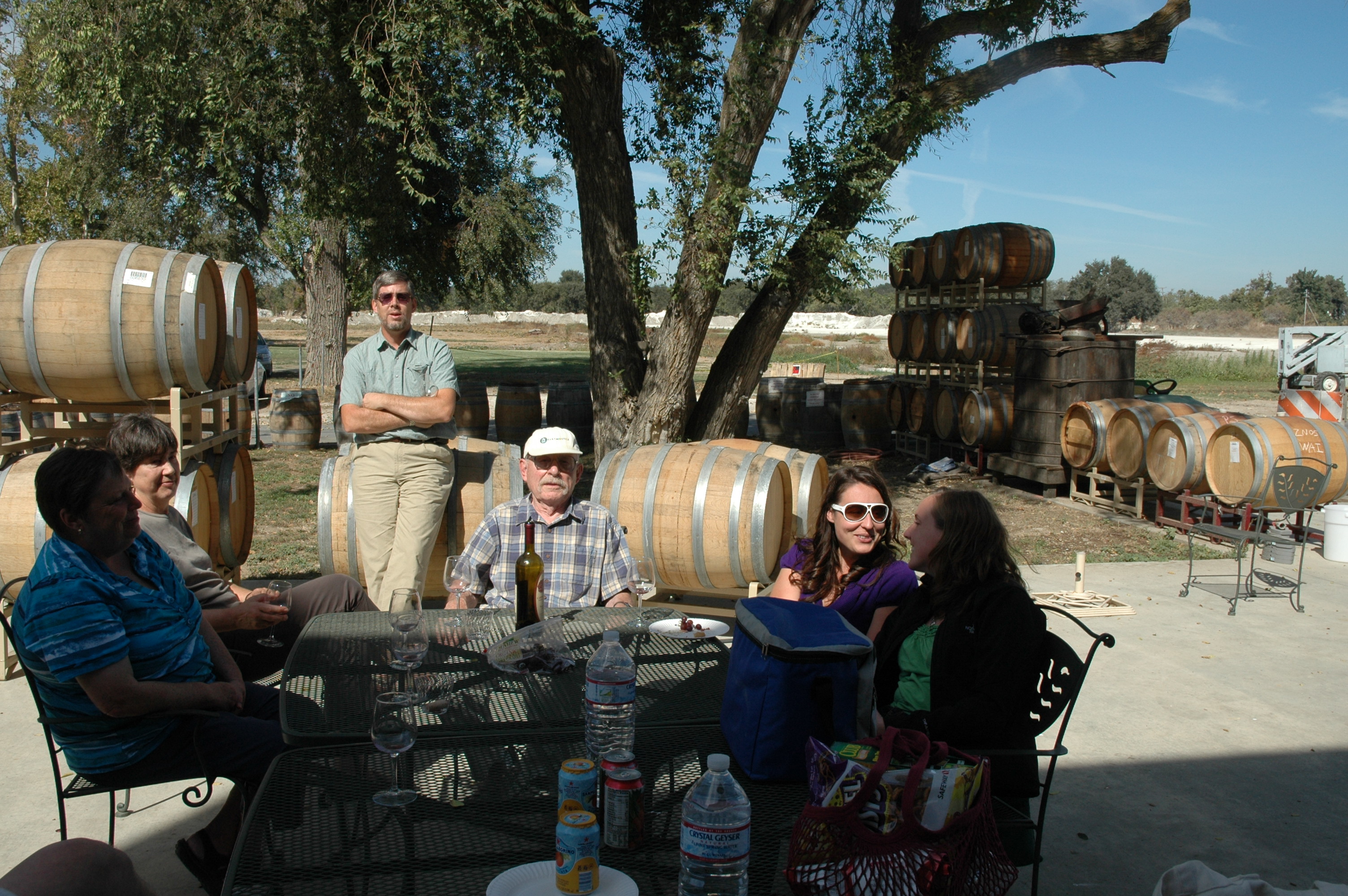
Down in Sacramento, we met up with my Dad, both my siblings and their spouses, my 2 nieces (one of whose wedding we were celebrating!!) and a whole bunch of other folks, some of whom were from the groom’s side of course.  We had three days of fun together, including a visit to the Old Sugar Mill out on the Sacramento River delta, which now houses a collection of wineries.  We brought a picnic lunch:

On our last evening there, the bride and groom hosted a lovely outdoor reception and dinner at their new home:

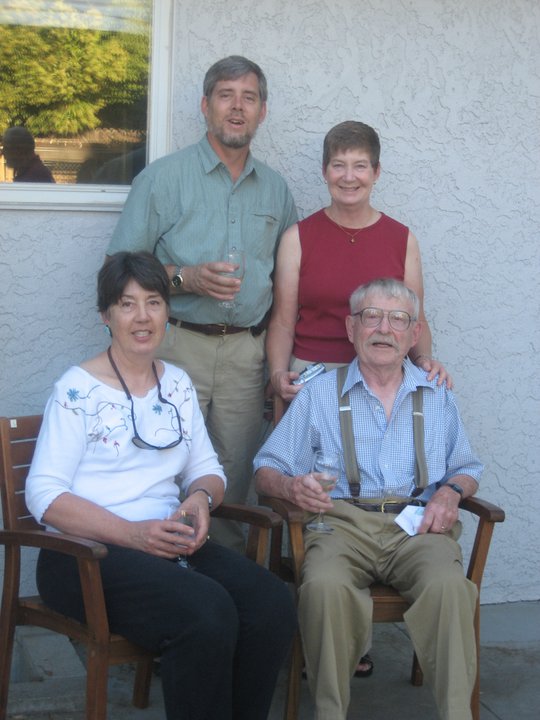
Dad and us "kids"

Three of my favorite men

The Shaws with a new addition to the family

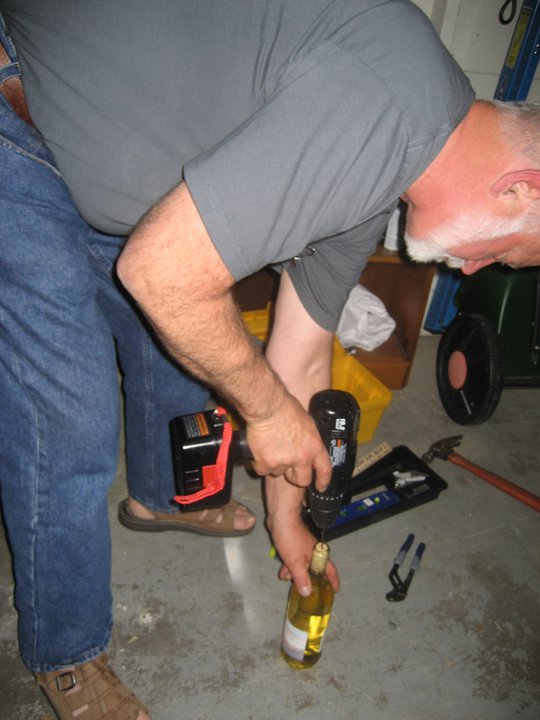
Also, Rick showed them how we open wine bottles up in the Methow Valley:

A particularly stubborn cork doesn't stand a chance....

On the way back we camped near Mt Shasta, visited Gretchen and grand-kids and great-grand-kids in Medford, then wandered up through central Oregon and Washington to home in our little valley.

Hot off the loom

We’re getting ready to go on a little fall jaunt, so I have been tearing around trying to finish things up, take care of work responsibilities, get ready for events that happen right after we get back, etc.  Not much time to blog!  But here are the four plaited twill scarves I wove earlier in the week:

They will look a lot nicer once the fringes are twisted and they are washed and pressed.  But I am happy with them!  The two on the left were woven with tencel (in Moroccan Blue and Adobe).  The two on the right were woven with rayon chenille, and I particularly like the one on the end.  When it is moved around in the light, the pattern shifts in an almost irridescent manner.

Weaving up a storm

I’ve been working on the looms a lot the last couple of weeks.  Part of the motivation is wanting to finish some things (rugs for a trade and to have out on consignment; stockpiling things for the holiday sales coming up) but part is also my new fascination with the plaited twill scarves I started on last month.

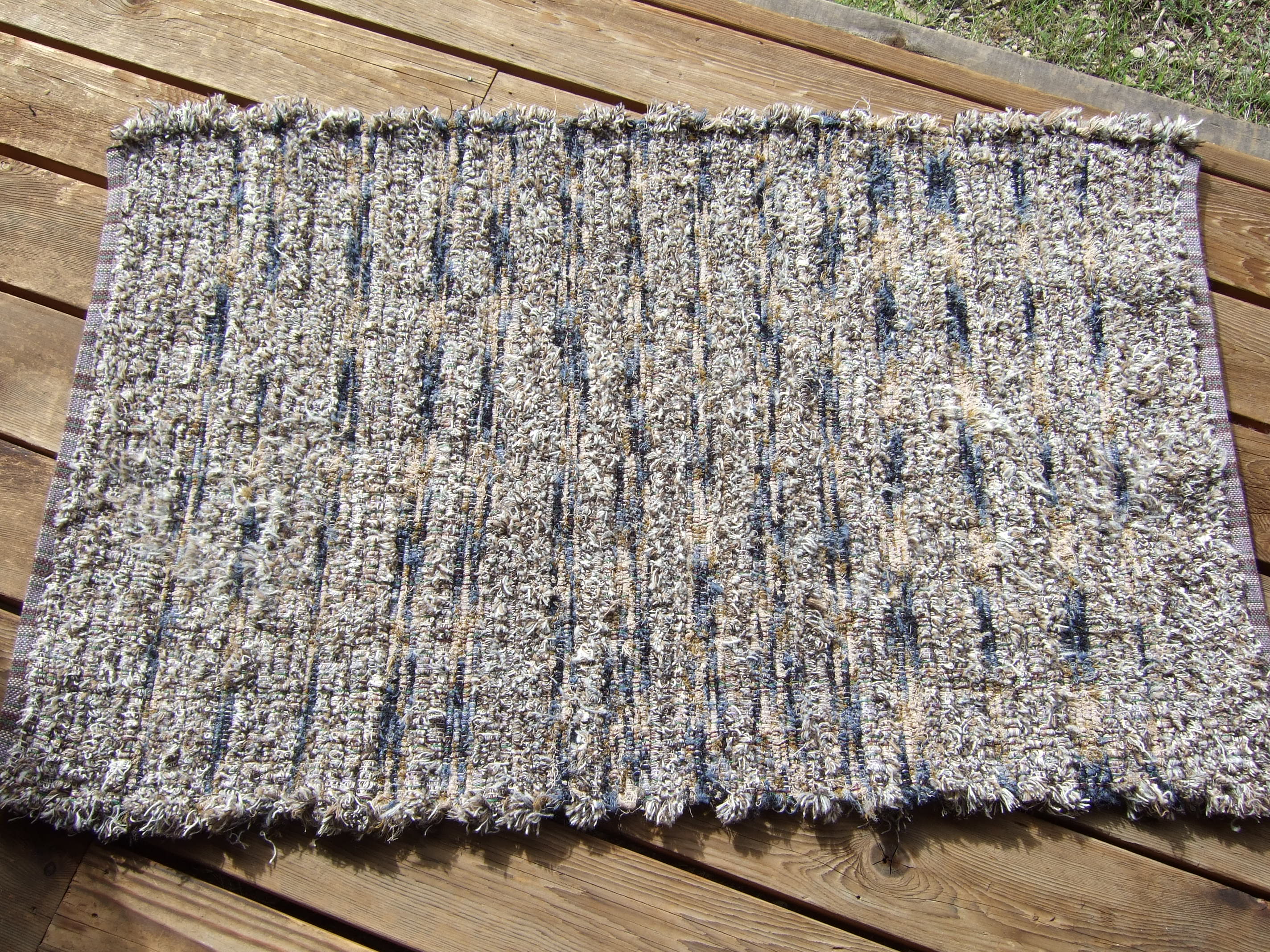
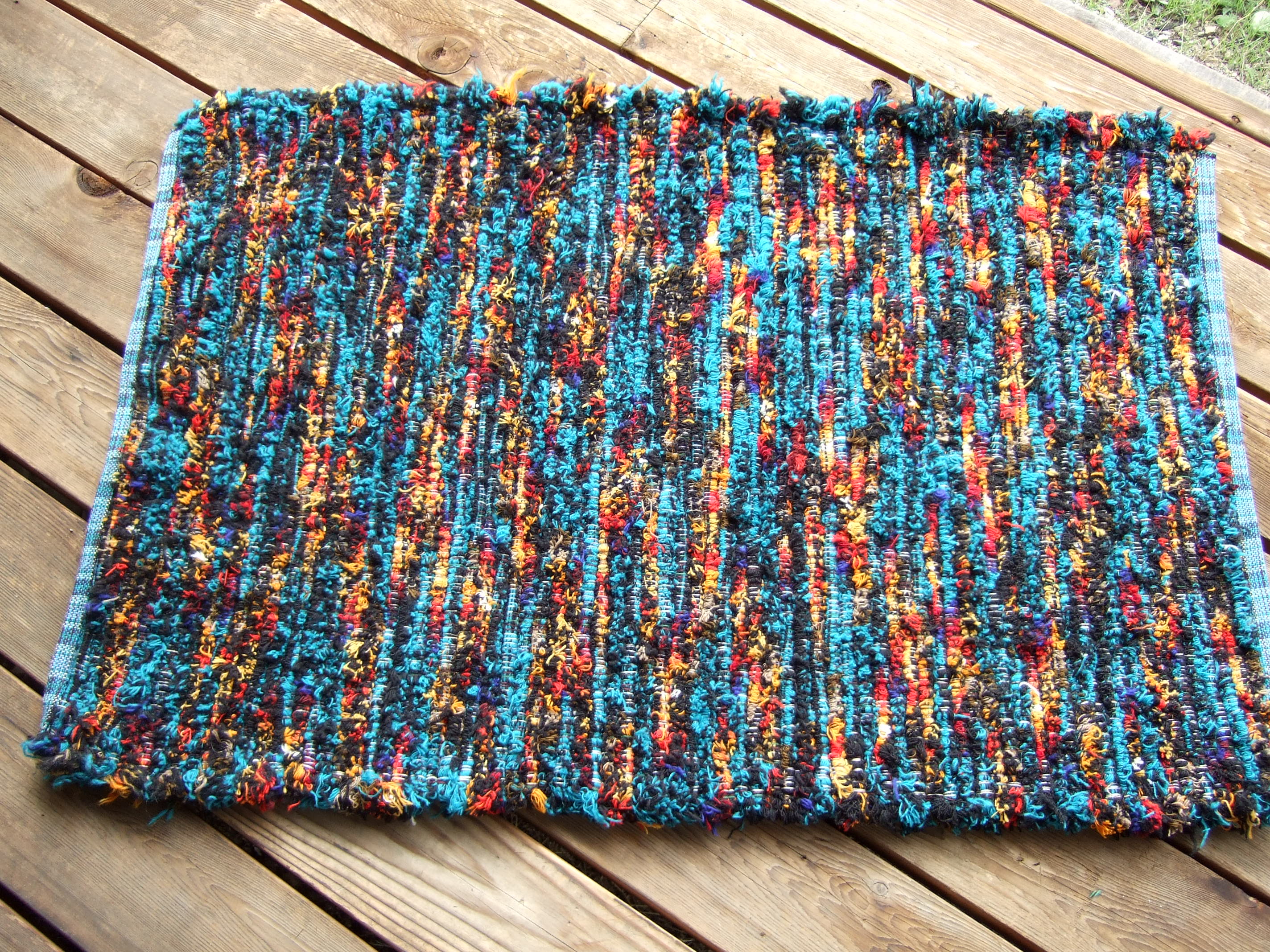
So I finished 4 rugs using Pendleton fringed selvages.  One was an order to match the 10-ft hallway runner I wove last month:

Really liked this next one, it reminds me of a Hudson’s Bay blanket.  I have more of the material and I am going to try alternating it with some smooth selvages from Pendleton in similar colors.  But, not this week!

And the other two:

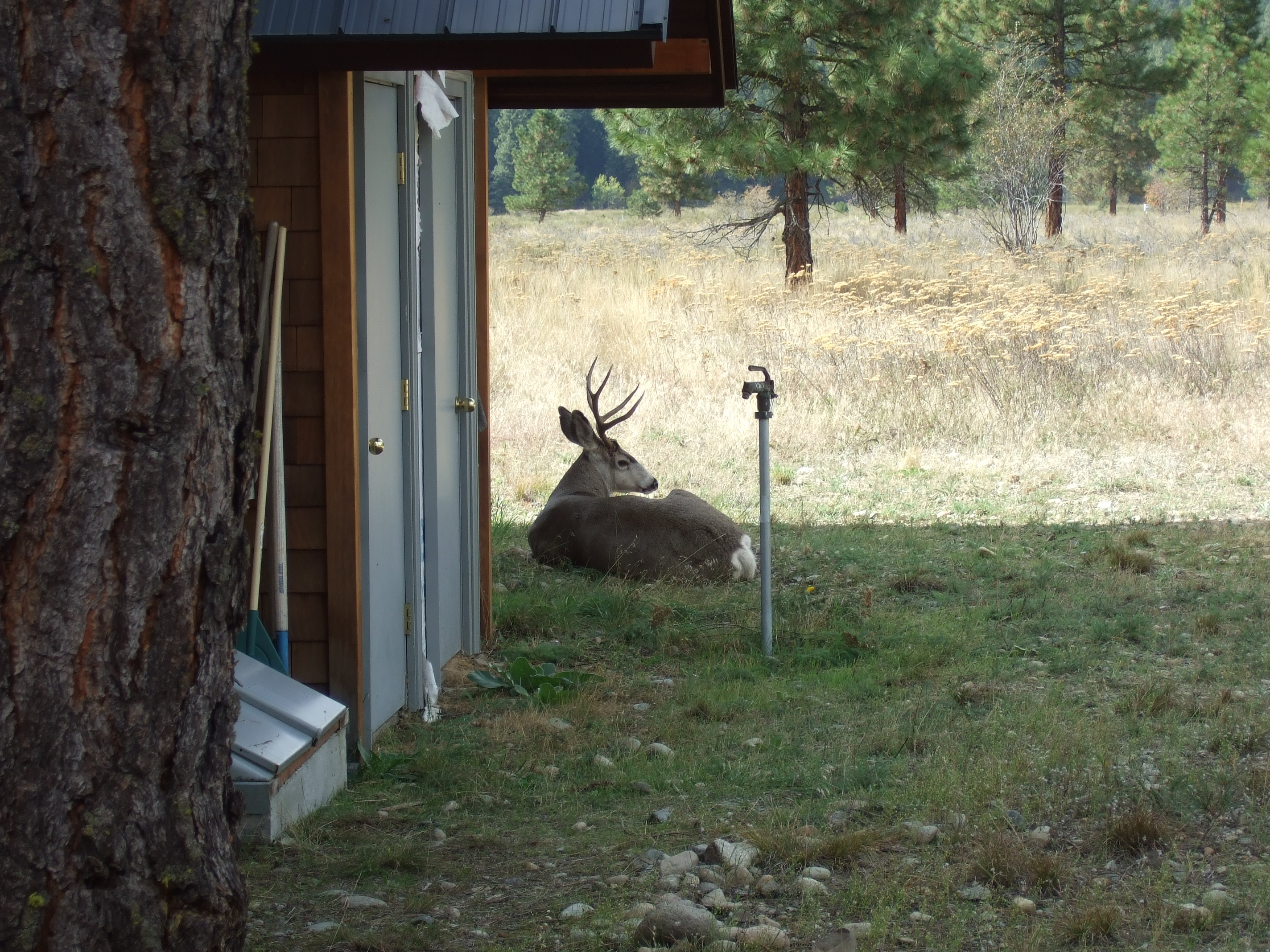
By the way, Alfred has been hanging out behind the house a lot lately – just by himself.  He is definitely bulking up some.  We talk to him and tell him to stay around the neighborhood, with hunting seasons underway (had a bow hunter in the YARD last Sunday, looking for a deer he had shot.  Gah).

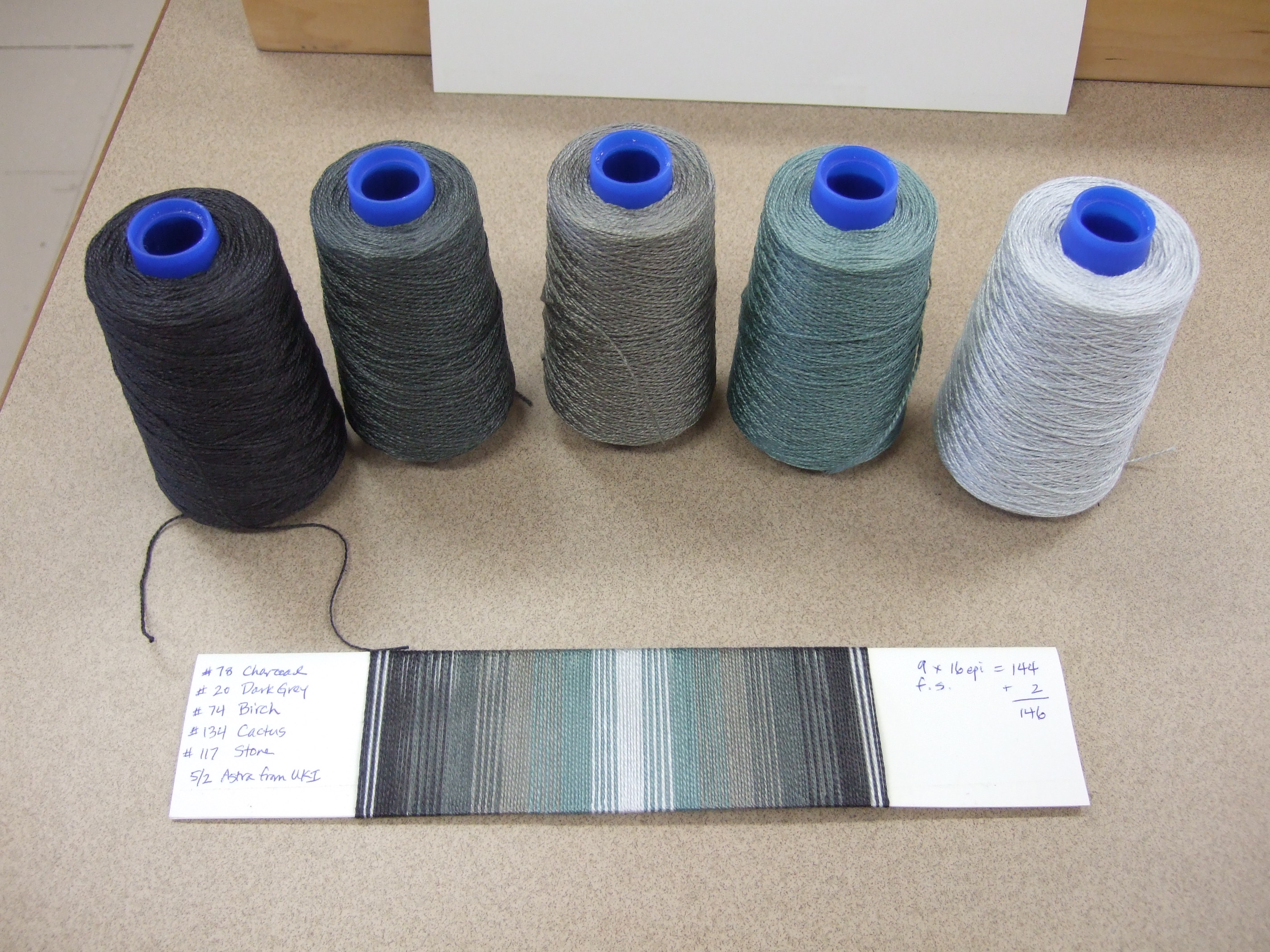
I wound 9 yards of warp for a new series of 4 plaited twill scarves, in a grey-green colorway, using 5/2 perle cotton:

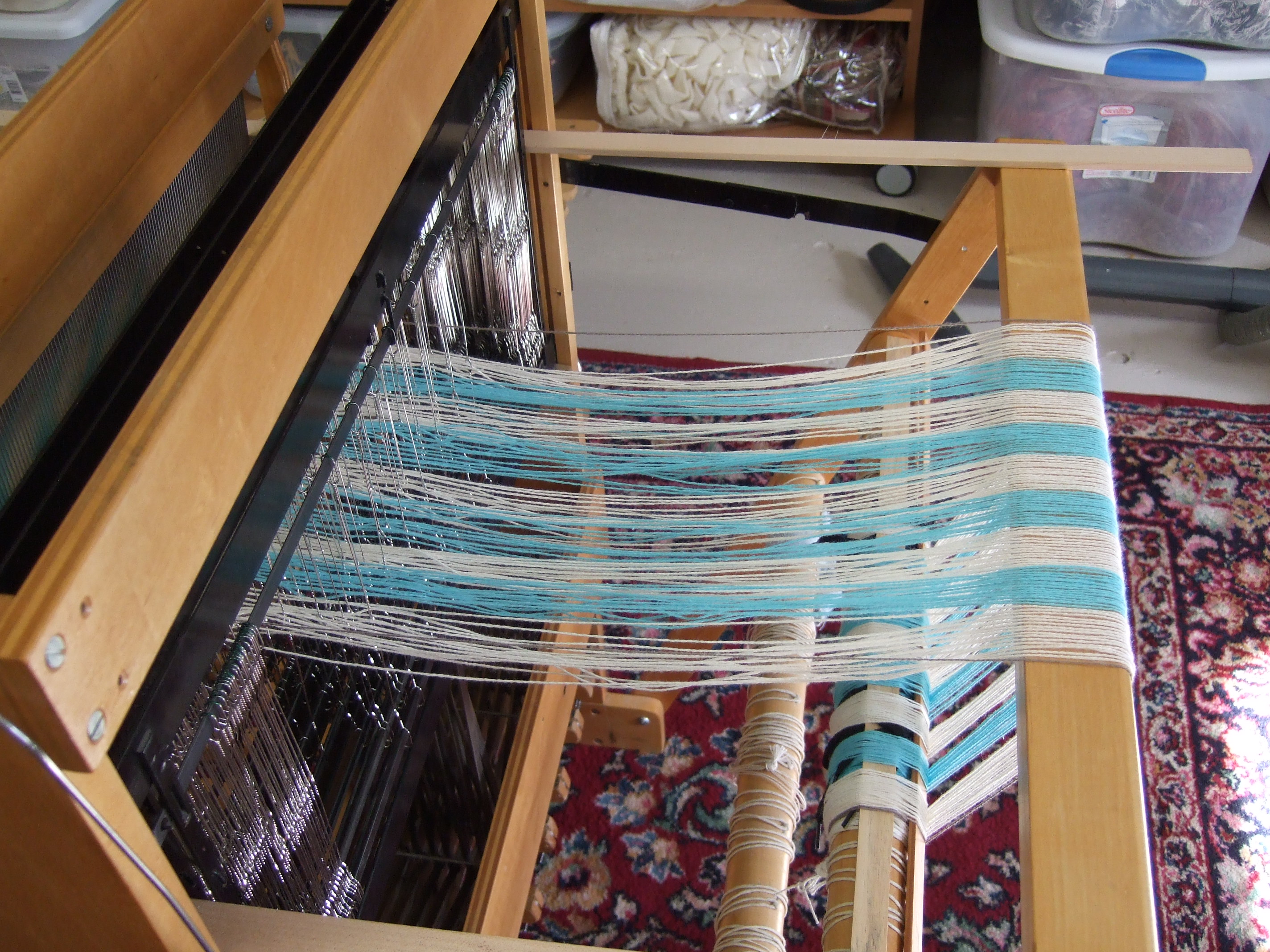
I decided to use a “dummy warp” this time, so I can be sure to have enough for the 4 scarves, and tie on a new colorway when I am done.  I used 8/2 matte cotton and set it up with groups of 16 ends in alternating colors.  Because of the way I have designed the scarf warp, it makes it easier to tie on and keep track of where I am.

In a bit of a marathon, I wove off all 4 scarves the last 2 days.  Pictures later!  Of course, they still need to have their fringes finished, be washed and pressed, etc.  But I am happy with them.

Purple Ribbons

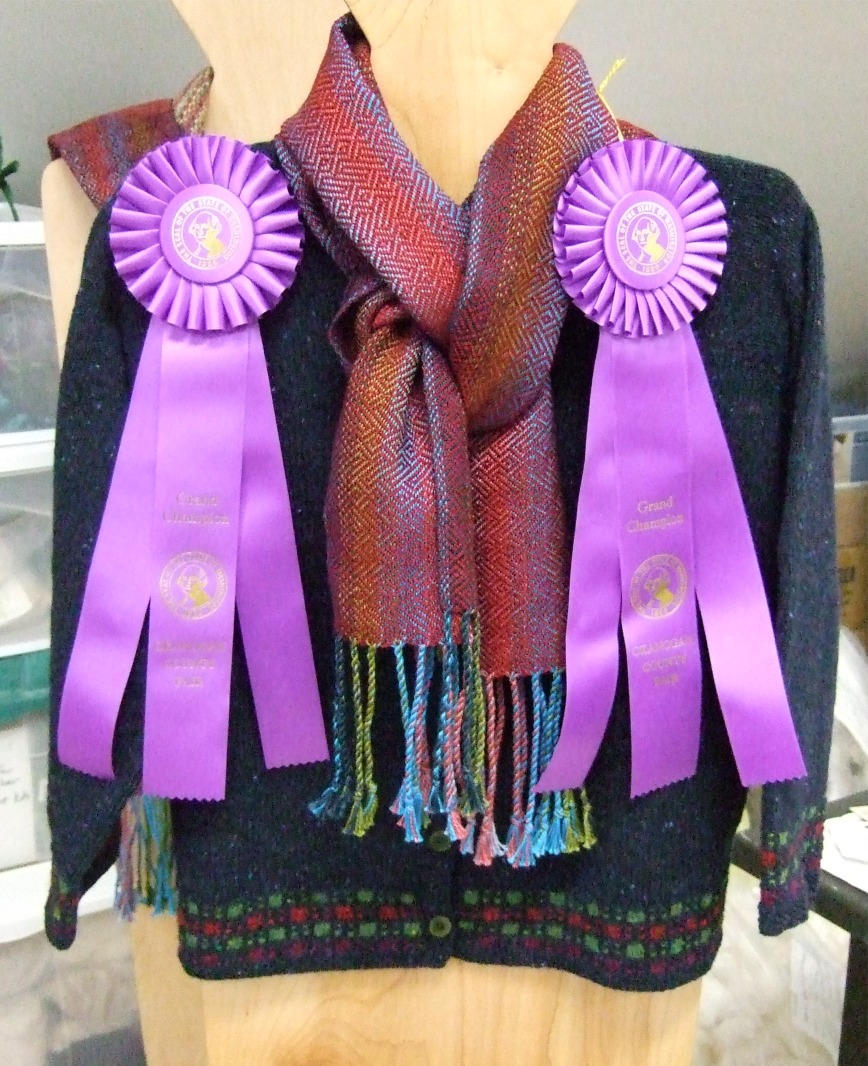
I did well at the county fair –  two Grand Champion ribbons, one for my Mosaic Edge Cardigan sweater, and the other for one of the plaited twill scarves I finished recently:

I know these awards are supposed to be based on the merits, not in comparison to other entries, but the fact was that there seemed to be a lot fewer entries this year in all the fiberarts fields.  It was disappointing, just because it is nice to see what other people have done.  In particular, I noticed there were a lot fewer quilts this year than last year.

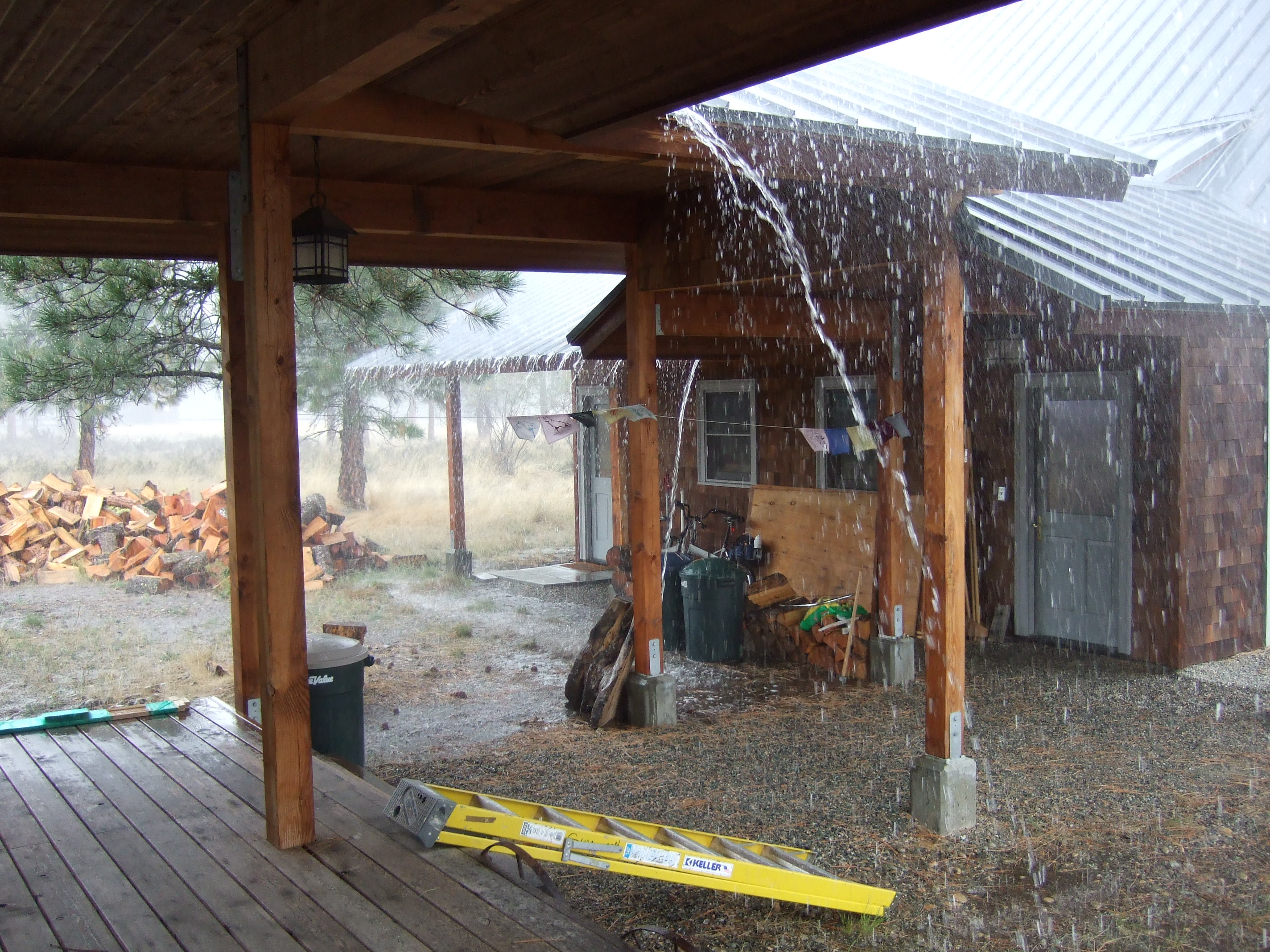
I am weaving away on more scarves, plus a few rugs.  I came into the house from the studio yesterday afternoon, just as it was starting to rain and thunder.  The next thing I knew there was a complete deluge, like someone was pouring ice water over the house.  I say ice water, because there was a lot of hail mixed in.  I can’t remember ever experiencing such a heavy, sustained downpour.  Teasel was so freaked out she came downstairs and was slinking around with piteous meow’s, trying to hide…  Sheesh!

It’s been such a varied week, I thought I would just do a kitchen-sink kind of post today.

In anticipation of the upcoming Okanogan County Fair, and also a new round of teaching the top-down raglan sweater class, I finally got the little cardigan finished that I knit over the summer.  I still needed to darn in the ends, sew on the buttons, and block it.  It was knit using Rowan Yorkshire Tweed (about 7 sts/in), which sadly is a discontinued yarn.  I only had so much of the main color and couldn’t find more anywhere, so I had to get creative towards the end.  It is knit in one piece from the top down, and for the borders I used a mosaic pattern called “Sanquar Check” from one of the Barbara Walker books (1st Treasury of Stitch Patterns I think, am too lazy to go out to the studio and check…)  I had to go with 3/4 length sleeves due to the running-out-of-yarn problem, but I think I actually like them that way.  So, finished object:

On Sunday of the Labor Day weekend, I set up my booth at the Winthrop Artisan Market.  It was very windy, overcast, and a little cold!  We had to tie all the pieces of my display down so they wouldn’t blow over.  I did sell one rug and 2 shawl pins, so it wasn’t a complete bust…but nicer weather would have helped, I think.

Also that Sunday my Dad came over from Anacortes in his little Rialta motorhome, with his cat Squeaky, and spent 3 nights with us.  Sadly, the weather remained cool and rainy, with occasional sun breaks, so we couldn’t do much outside.  But still, we had a good visit.  Took Dad up to see one of the houses Rick built cabinets for last year, and also went up to see the job site for an upcoming job this fall.  It’s in a beautiful location up the Lost River valley.

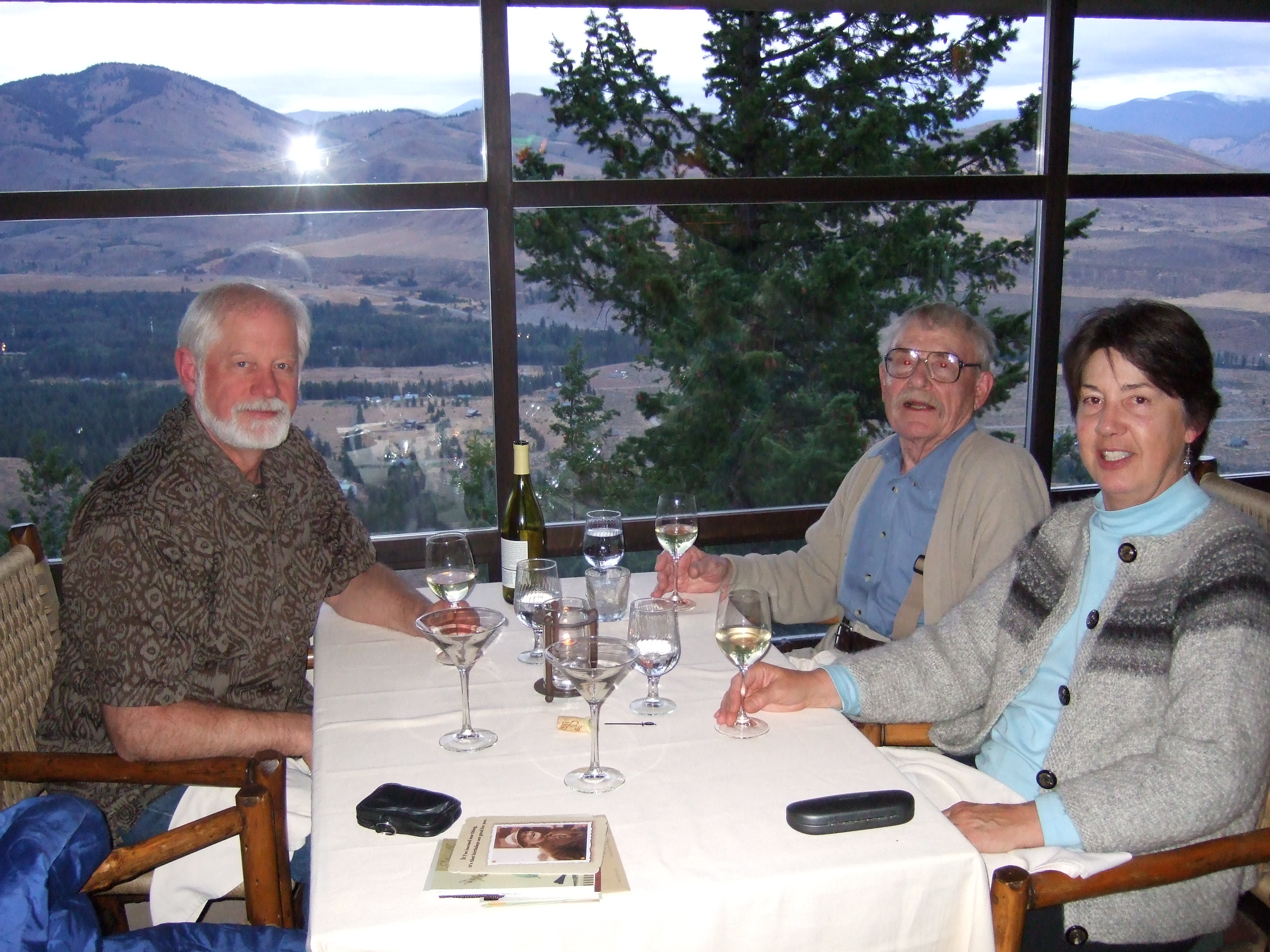
Tuesday was Dad’s 91st birthday and we went up to Sun Mountain Lodge for dinner.  We had one of the best tables with a beautiful view up and down the valley below, and it had cleared up some so the views were spectacular.

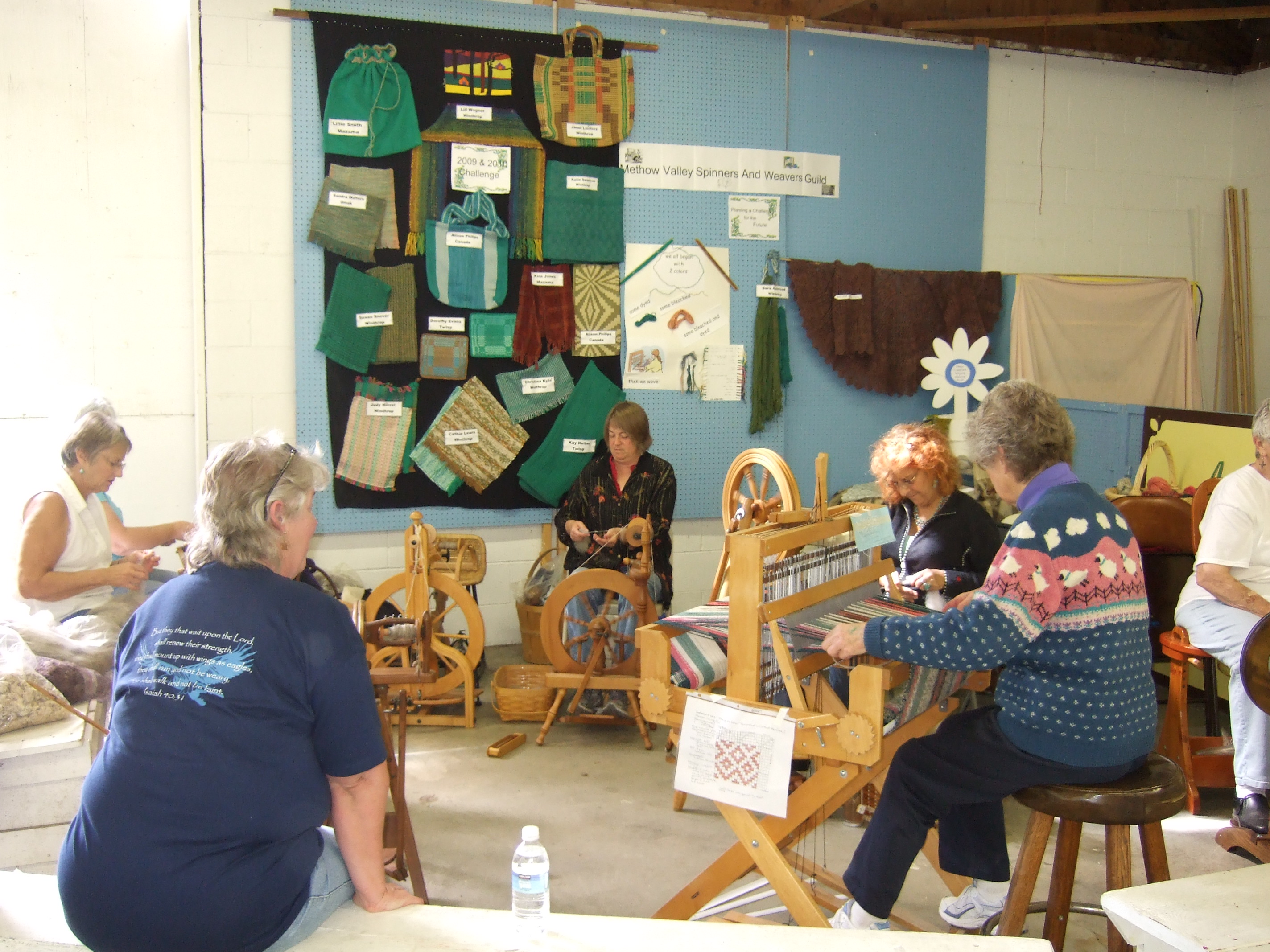
Thursday was the opening day for the Okanogan County Fair over in Omak.  A group from our guild, Methow Valley Spinners & Weavers, had organized a “fleece to shawl” event.  We had a loom already warped for a shawl with handspun yarn that several of us had supplied.  We brought a washed fleece, a natural colored Romney from The Pines Farm in Maple Valley (south of Seattle).  We hand-carded the fleece, spun the rolags into singles, then I was the “designated plyer” and made a 2-ply yarn.  This was handed off to the weavers, who wove the shawl.  We actually finished it in about 5 hours – I was amazed!  Thursday was also the day that a lot of school groups came through, and the kids were really interested and asked a lot of questions.

That’s our guild display on the wall that my friend Diana puts together each year (with some help, but it is mostly her effort).  We usually show what the guild challenge project was for the year, and as I last blogged about here, this year it was to “do something” with some emerald green and camel brown cotton yarn that we had been given an abundance of some time in the past.

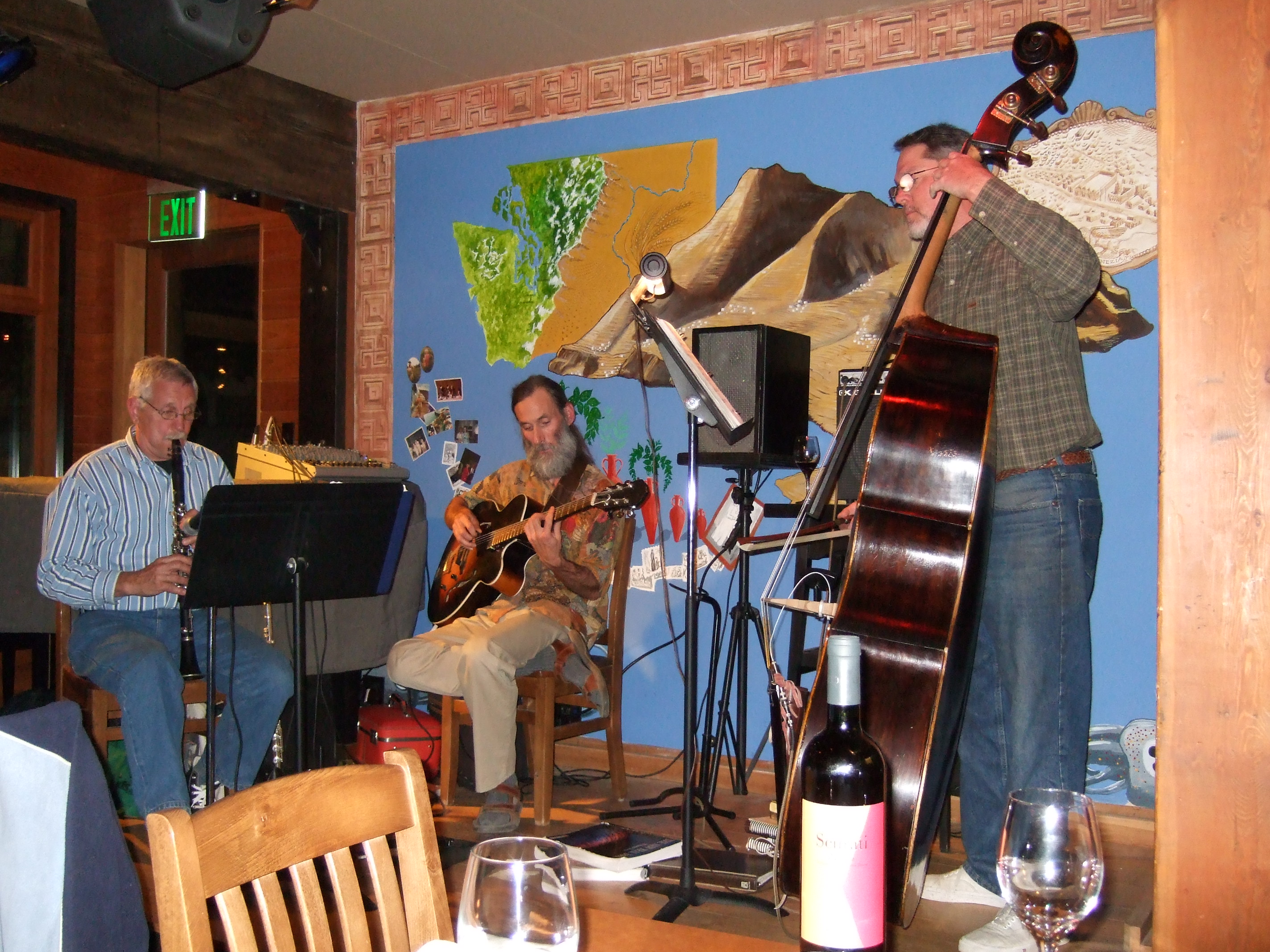
The rest of this week, I’ve started on a new round of scarves on my little workshop loom.  Last night we worked late and decided to go down to Twisp for dinner at Tappi.  It turned out one of our favorite groups was playing jazz:

And here’s John with part of our dinner just out of the brick oven – it’s the “Malandrino” burger.  Calling this a burger is more than a little misleading.  And yes, we split it.  It’s a full pound of beef, with grilled onions and grilled tomatoes, melted blue cheese, on a homemade pocket bread.  Best eaten with knife and fork!

Plaited Twills

I finished the 3 scarves that I last blogged about here.  These all had the same 5/2 pearl cotton warp, using 5 colors in sequence, with blending at the edges.  The threading, tie-ups and treadlings came from Chapter 10 in Carol Strickler’s book, A Weaver’s Book of 8-Shaft Patterns (Interweave Press, 1991).  This is the chapter on Plaited Twills, and I used the threading called “double 2-tie” which has every other thread on shafts 1 and 2 (alternating) and the others running up from 3 through 8 and back down again in a twill-like fashion.

Like almost every new weaving project I attempt, it was definitely a learning experience!  I initially threaded it at 20 epi (ends per inch), 2 threads per dent in a 10-dent reed.  After sampling (shown in my initial post), I wove the first scarf with a dark red rayon chenille, using the tie-up and treadling for #370 on p. 103 of Strickler.  This one used all 10 of the treadles on my loom.

It came off the loom stiff as a board, and I was bummed to say the least.  So much for my “best guess” at sett.  Lesson 1: weave the sample, take it off the loom and wash it to see what the final fabric will be like, before proceeding.  There were other problems.  The little workshop loom (Macomber model CP) has a known problem of having the tie-up hooks jump off the lamms, disconnecting the treadle from the frames it is supposed to raise, and creating havoc with your pattern if you don’t catch it.  For some reason, this kept happening with the leftmost treadle only.  I thought I caught it each time, but when I took the scarf off the loom there were 3 shots that obviously were not in pattern.  I must have lost one of the 5 tie-up hooks on treadle 1 without realizing it (just before the rest of them imploded).

After washing and pressing, the scarf is still a little heavy and stiff but acceptable.  Magic really does happen in the water!  Here it is, pretty pattern but flawed…

Moving right along, I re-sleyed the warp at 16 epi (2 threads per dent in an 8-dent reed).  Then I changed the tie-up and treadling to #377 on p. 105 of Strickler, and changed the weft to 2 strands of black 10/2 tencel wound together.  This one used only 8 of the treadles so I was able to leave the 2 at either end out of action.  I only had a couple of problems with the tie-up hooks this time around, and was able to catch it each time.

I really like this pattern, and the scarf came out nice and slinky after washing.  The only problem was, I could tell partway through that I had tension problems in the warp and there were a couple of warp threads in the middle that were much tighter than the rest.   You could really feel it as a tight area when it came off the loom.  I had tried a new warping method this time (Warping on a Shoestring, booklet and video from Nadine Sanders) and obviously I need some practice.

Fortunately, after washing the effect mostly disappeared.

For the third scarf, I pulled the remaining warp off the back beam through the heddles and reed, and then re-wound it with proper tension.  Then I wove the scarf with the same pattern #377, but using a dark red tencel this time around.  This is a great example of how the interplay of color of weft with warp creates what I think Ruby Leslie calls “optical color blending” – the stripes looks like different colors in this scarf than in the one using the black weft.

I really like these plaited twills and will probably do more of them later, using different materials.