Feeds:
Posts
Comments

Archive for the ‘weaving’ Category

Sorting Out Sotis

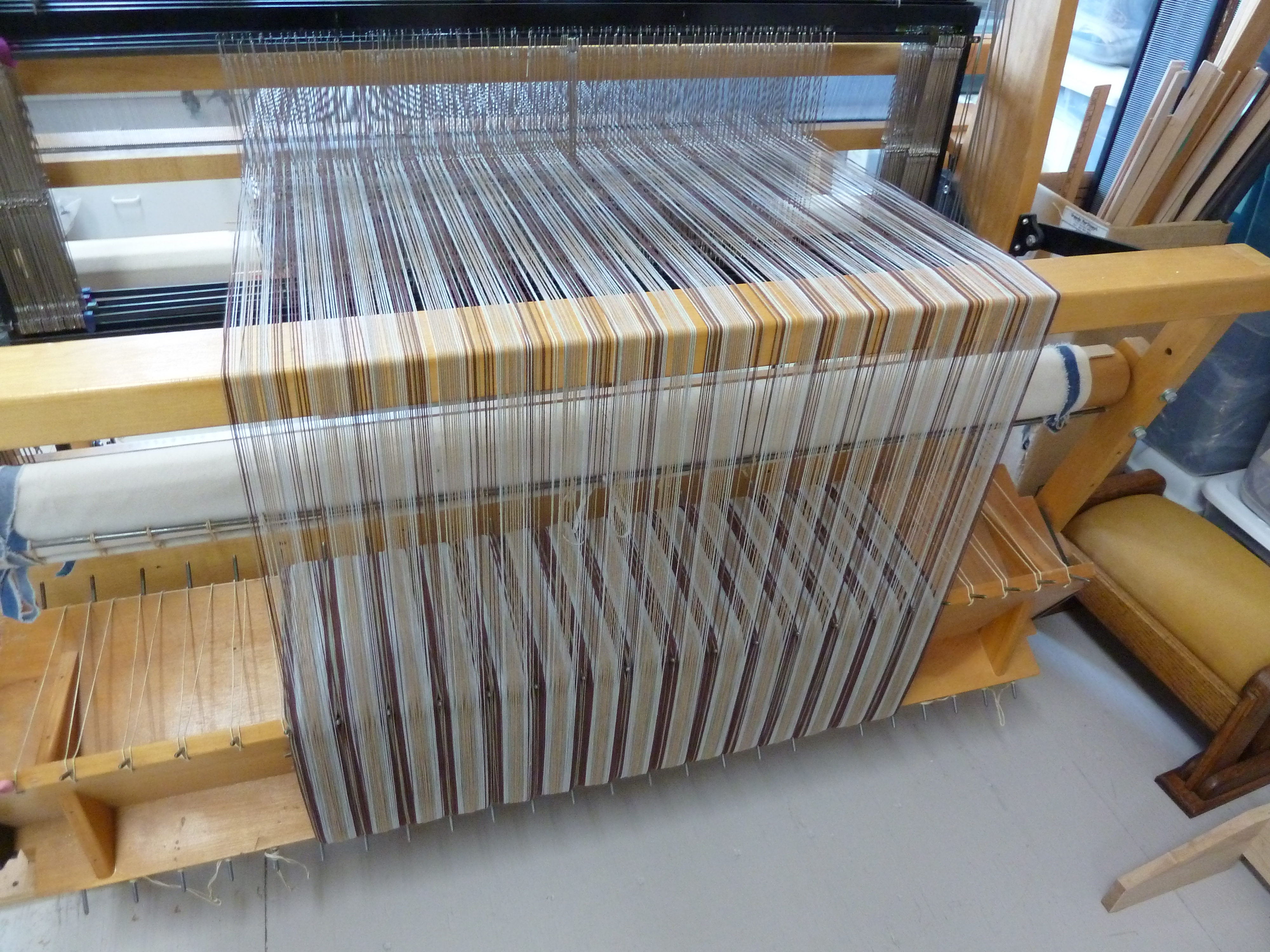
A few days ago I finally unfolded my Baby Mac workshop loom, got out my notes from Kay Faulkner’s 3-day workshop on Warp-Faced Weaves at the ANWG Conference in June, and went back to figuring out what to do with my 4-yard warp.  I last blogged about it in this post after the conference.  I hadn’t made it much farther than getting the warp on the loom.

My warp is threaded for a combination of plain weave sections alternated with the Sotis cloth (patterns from West Timor).  Kay’s notes are based on a nomenclature she came up with that makes sense to her, but isn’t terribly clear until you figure it out.  I also had her article from Handwoven Mar/Apr 2013, and studying the weaving pattern from that was a great help.  I wound up making my own notes about how to weave the 6 basic patterns she gave us.

Basic Sotis patterns 1-4
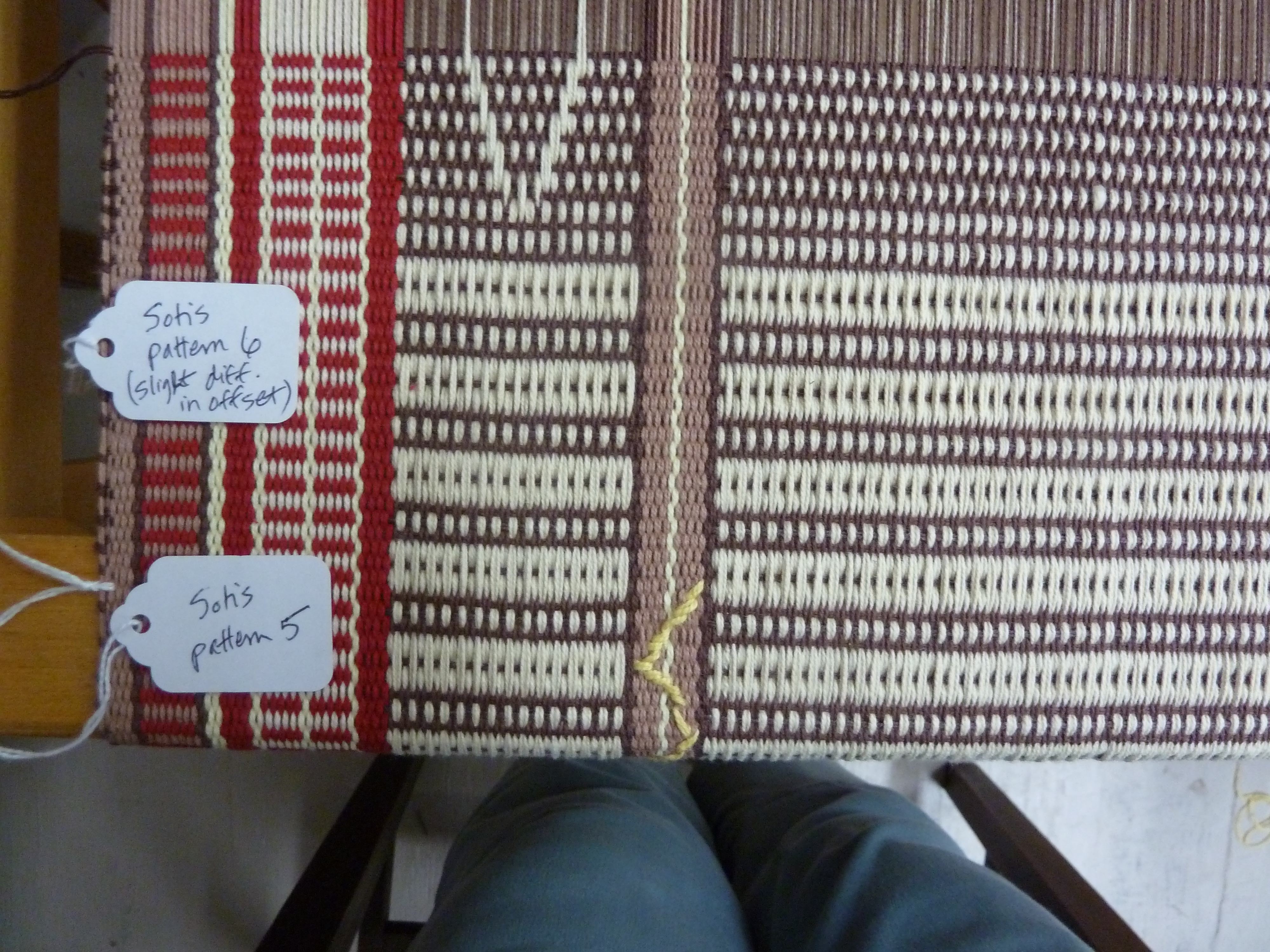
Basic Sotis patterns 1-4

Basic Sotis patterns 5-6

Basic Sotis patterns 5-6

In the above photo, you can see where I was trying the “warp wrapping” with a banana yellow color, in one of the plain weave areas.  Not with a great deal of success.  However, I am not sure I want to use this technique in my project so may or may not follow up with more experimentation.

I was more interested in getting a pattern motif in the Sotis areas, which has to be done with manual pickup of threads for this simple threading.  After a first attempt, I was starting to understand how this works, and made a plan for a motif.

Sotis motif plan

Sotis motif plan

and what do you know – it worked!

Sotis pickup

Basically, this is done within the context of Basic Pattern 4.  In my sampler, of the 60 heddles threaded for each side section, 30 are threaded with a single dark brown thread (can be thought of as “tabby a” for the section) and the other 30 alternate heddles are threaded with 3 cream threads run together (can be thought of as “tabby b” for the section).  The ones with 3 threads are referred to as “heavy”, to alternate with the dark brown “fine” threads.  But, those 30 heavy threads can also be lifted in alternating groups of 15.  This is how you get some of the patterns.  The pickup motif is done on a ground of basic pattern 4, where one bar uses just heavy “a” and the next bar uses heavy “b”.

I may try out the “exposed weft” technique next, then move on to weaving some placemats using combinations of the basic patterns, and incorporating my little pickup motif.

I also now know why Kay does some of her more elaborate Sotis pieces on a 24-harness computer loom, where she can treadle the Sotif motifs and not use pickup!  It works, but is slow and for now at least, requires vigilant attention to detail.
Read Full Post »

The $11 Solution

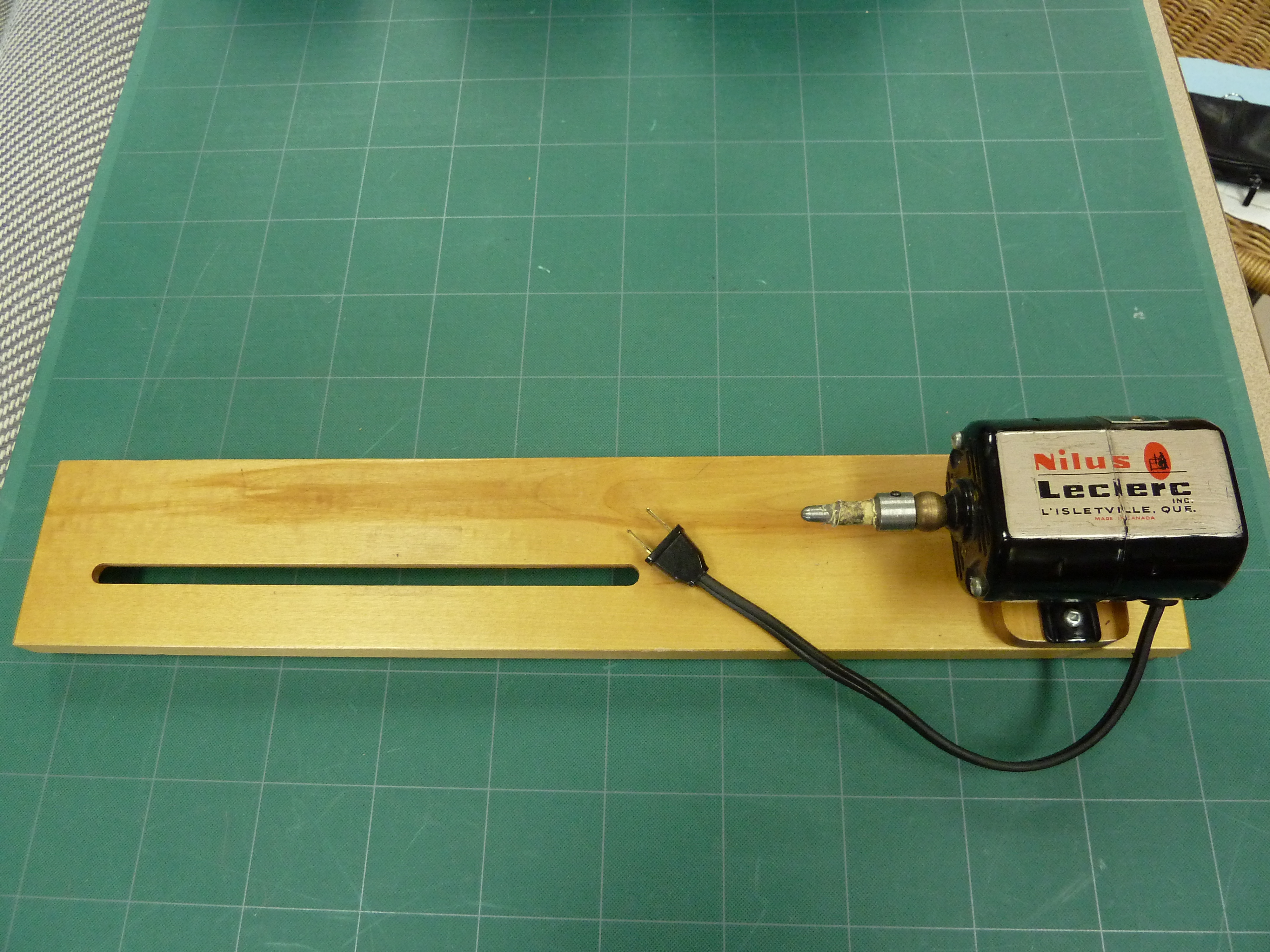
Several months ago someone gave me part of an older Nilus LeClerc double-ended electric bobbin winder.  She had gotten it years ago with a loom purchase, but “some of the parts didn’t make it into the box”.  Specifically, it was missing the end that slides in a groove, and the rheostat foot control.

Leclerc hybrid before fix

I tried to get the missing part but the people at LeClerc (in Quebec) said this was an older style and they don’t keep spare parts for older machines.  Studying the pictures on their website, I could see that the new ones have the spring mounted down in the groove, not on the shaft of the part that slides in the groove (which is what this one would have had).  So I figured I was out of luck.

At the ANWG conference at the end of June, someone was selling some old weaving equipment in one of the booths.  Among this was an older Nilus LeClerc double-ended winder.  So I took a chance and bought it.  I should have been more careful in checking it out, because when I got home the foot control (wrapped up and taped in paper) was broken.  However, I could get it fixed at a sewing machine shop in Wenatchee, although as it turns out Rick was able to take it apart, bend a flange back into place, and put it back together all cleaned up and oiled.  So now I had a working winder!  You can see how the spring is mounted in this picture.  The moving part is tightened down with wing nuts from below, once positioned in the groove for a particular bobbin length.

LeClerc winder from ANWG conf

In the meantime, I got to wondering if LeClerc couldn’t sell me a new base plate and moving end from their current model.  So after some back and forth with calls and emails, they agreed to this and it came last week.   Or at least, they sent the moving part and a spring – not the base with the groove!  I guess I didn’t communicate clearly what I was expecting.  However, I am fortunate to be married to a guy who is both handy and handsome (a Red Green Show reference).

He had to trim the wood that slides in the groove – very carefully, on the table saw, until it fit just right.  Then he had to re-position the motor so the two ends that hold the bobbin line up (in a brand new winder, the motor is a different model and is offset on one side).  He had to figure out how to mount the spring in the groove from below.  But in the end, it worked great!  Here is my hybrid winder:

LeClerc hybrid winder 1

new sliding part on left, old motor end (re-positioned) on right

LeClerc hybrid winder 2

I still have to get a foot control, but the sewing machine store in Wenatchee says they have a box full of old used sewing machine rheostat foot controls with plug for motor and light that I can get for $10-$15 (just like the one on the ANWG conference one, which I have been using for now).

Now I have been using it to wind off spun singles from my spinning wheel’s Woolee Winder bobbin onto plastic spools.  I learned this from Judith MacKenzie – spin all your fiber and put on plastic storage bobbins as you go, then ply from those bobbins.  Saves a ton of money on extra spinning wheel bobbins.

But the electric winder goes like a bat out of hell, and I had to just barely depress the foot pedal to keep it slow enough.  Otherwise the spun singles would break – they are a lot more “tender” than weaving yarns you would wind off a cone onto a bobbin.  It was hard to control the speed, and when I was done, the foot pedal itself was really hot.

So this is where we get to the $11 solution part.  I had picked up a tip from one of Peggy Osterkamp’s books that you could use a plug-in dimmer switch between the wall outlet and the foot control, as an extra rheostat.  But none of our local valley hardware stores had such an item – they just have the kind that are wired into a light switch on the wall.  So I went online and found this on Amazon:

lamp dimmer for winder

It totally solved the problem.  I plugged the dimmer into the outlet, plugged the foot control into the dimmer, then adjusted the sliding control until the winder was turning at a slowish speed with the pedal fully depressed.  The speed stayed nice and constant so I could concentrate on tensioning the yarn and filling the bobbin evenly.  The foot pedal wasn’t hot at all when I was done.  And this item only cost about $11!

So now I guess I will try to sell the one I got at the conference, and keep the “hybrid”.

Final note:  4 rugs finished this week.  The first three were an order from friends for their home at Lochaerie Resort on Lake Quinault – Chris picked the materials from my stash of Pendleton selvages when they were here last April.
R159 Lochaerie 1

R159 Lochaerie 1

R160 Lochaerie 2

R160 Lochaerie 2

R161 Lochaerie 3

R161 Lochaerie 3

R162 - fiesta time!

R162 – fiesta time!

Read Full Post »

I have been spending a lot of time weaving rugs the last couple of weeks, since returning from the weaving conference in Bellingham.  I used up the last of the warp I had on that loom doing these:

"Ruglets" R143 & R144

“Ruglets” R143 & R144

R145 - sold last weekend at Winthrop Gallery

R145 – sold last weekend at Winthrop Gallery

"Ruglets" R146 & R147

“Ruglets” R146 & R147

"Ruglets" R148 & R149

“Ruglets” R148 & R149

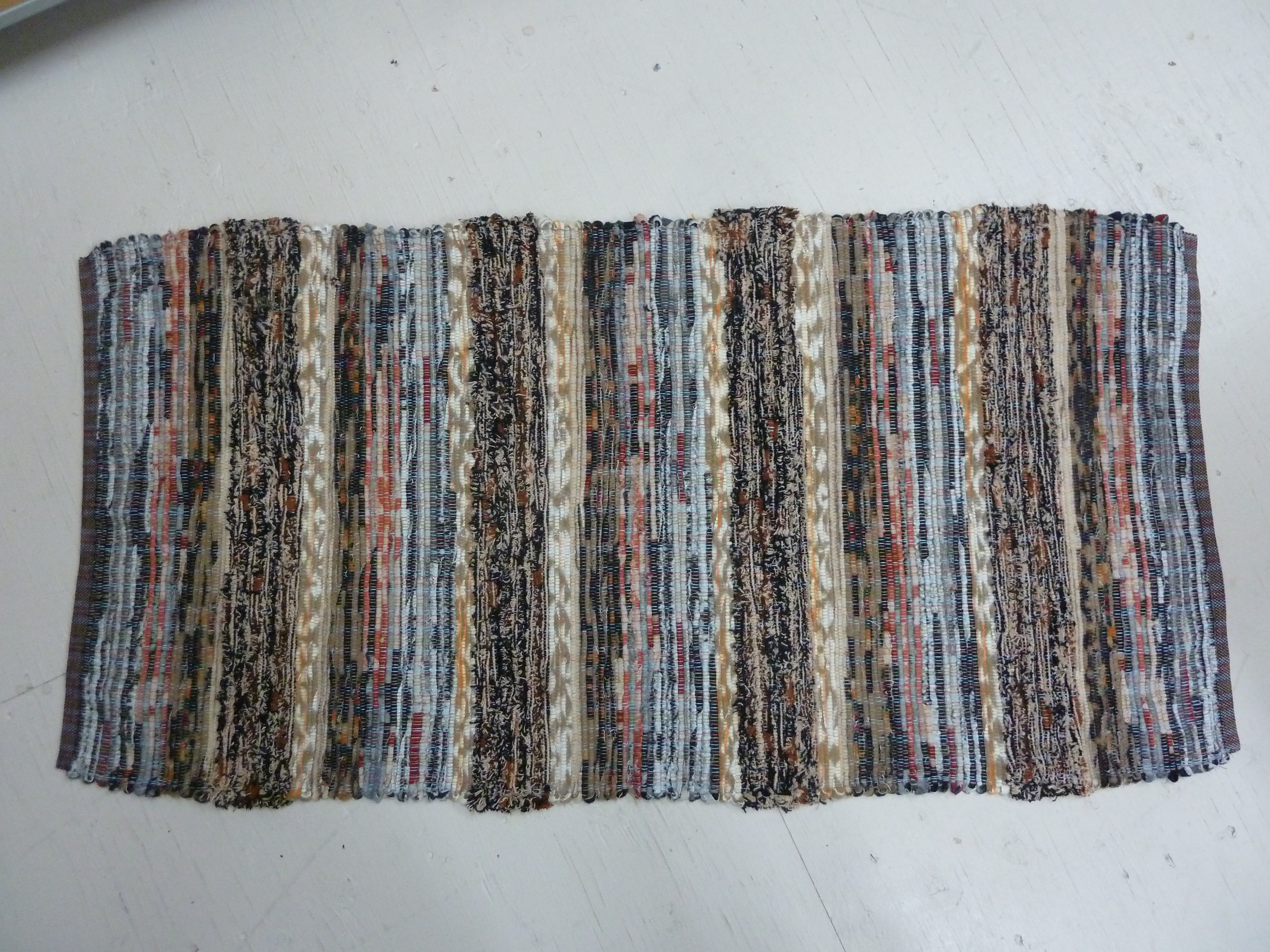
R150 - Pendleton wool shirting selvages

R150 – Pendleton wool shirting selvages

I am now working my way through my still rather large collection of Pendleton blanket and shirting selvages – trying to make some headway on using up materials I gathered at the mill outlets over the last several years.  When I don’t have much of something left, I am either working it into a full size rug along with other colors and textures, or making “ruglets”.  These are about 18″ x 30″ and I have found them useful around our house, at least, as hearth mats, bench mats, cat mats, small floor mats, or whatever.

Around July 1st I wound a new rug warp (about 47 yards) onto the sectional beam, and tied it on to the existing threading and pulled it through to the front beam.  No sleying and threading, I love it!  I also like the colors in the new warp.

rug warp June 2013

happiness is a new warp!

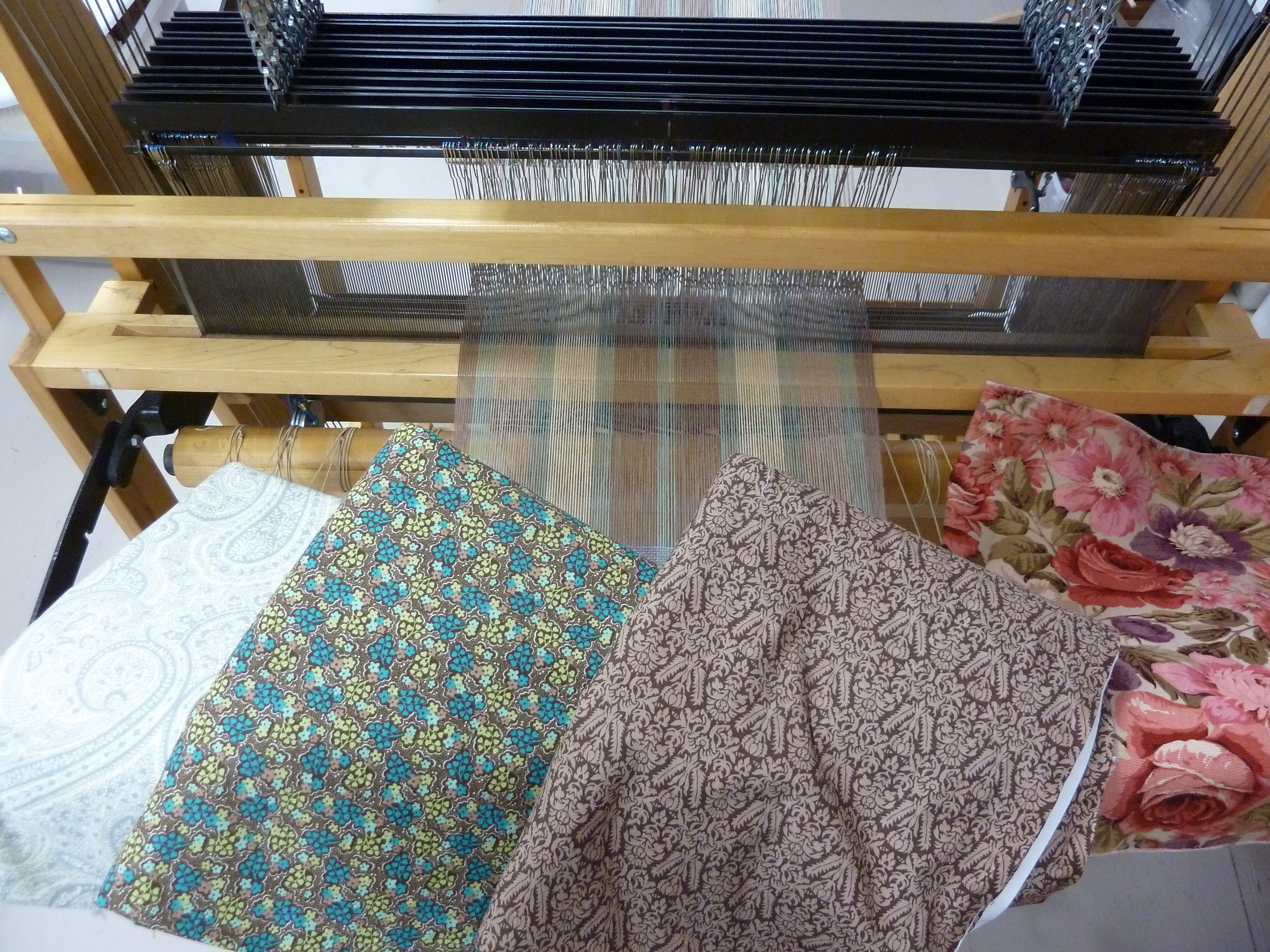
I had wound new warps for placemats (on Kingston the 32″ Macomber) and undulating twill towels (on Mother Mary’s loom, the 40″ Mac at the guild room) before leaving for conference.  Got the one for Kingston tied on, pulled through and wound onto the back beam, also the first week of July.  I am not sure when I will start actually weaving on these, but here is a picture with some of the fabrics I will be using:

placemat warp and fabrics ready for action

placemat warp and fabrics ready for action

Then it was back to rug weaving.  I am having a lot of fun combining different types and colors of the Pendleton selvages, and using up my stash in a creative way.  I finished these last week before leaving for the Coast on July 5th:

R151 - pretty much the same as R150 at the end of the previous warp

R151 – pretty much the same as R150 at the end of the previous warp

R152 - a small mat using up the last of these 2 colors

R152 – a small mat using up the last of these 2 colors

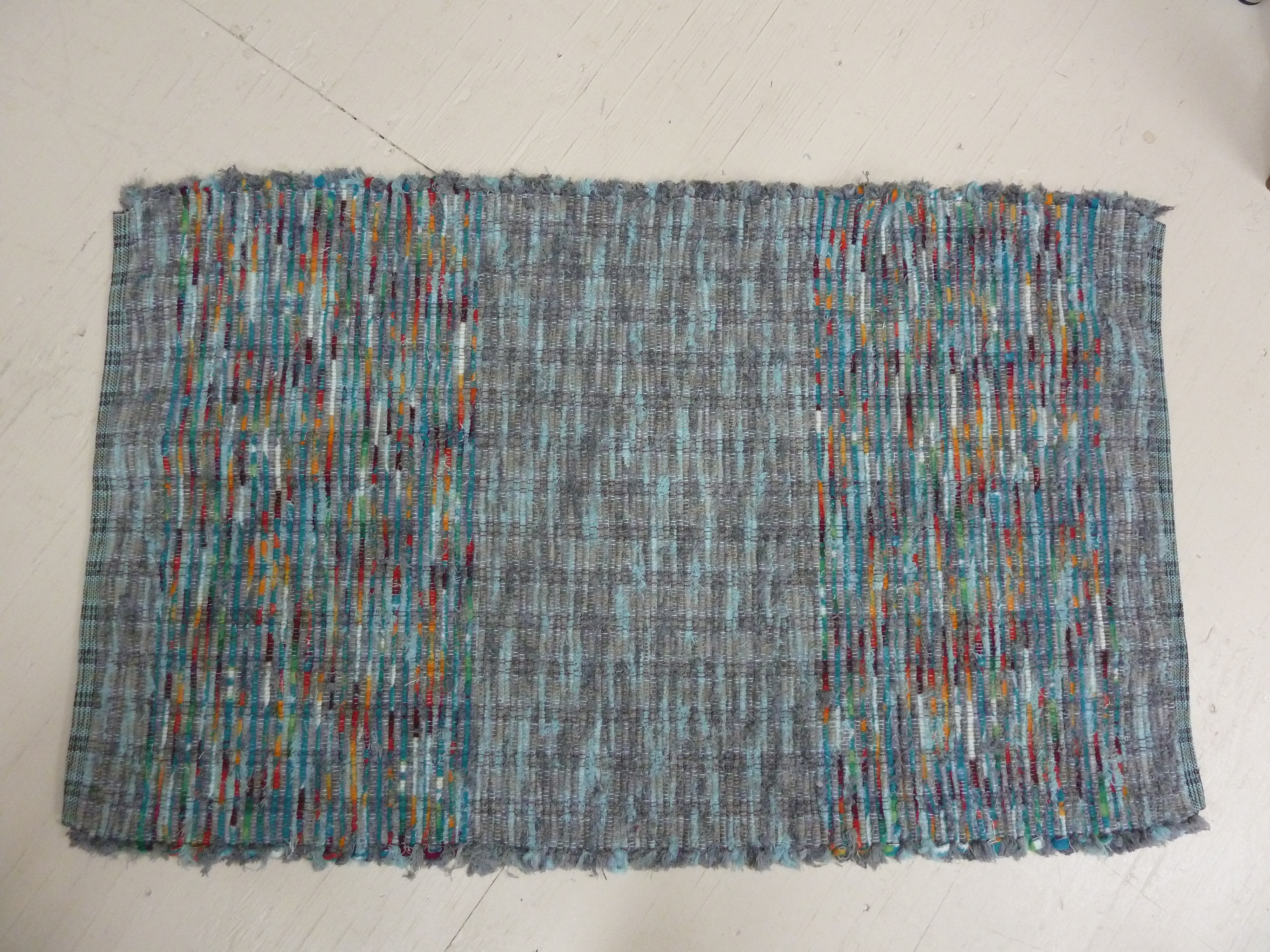
R153 - gray/teal shirting selvages alternated with bright "worms" at the ends

R153 – gray/teal shirting selvages alternated with bright “worms” at the ends

R154 - same approach, different colored "worms:

R154 – same approach, different colored “worms”

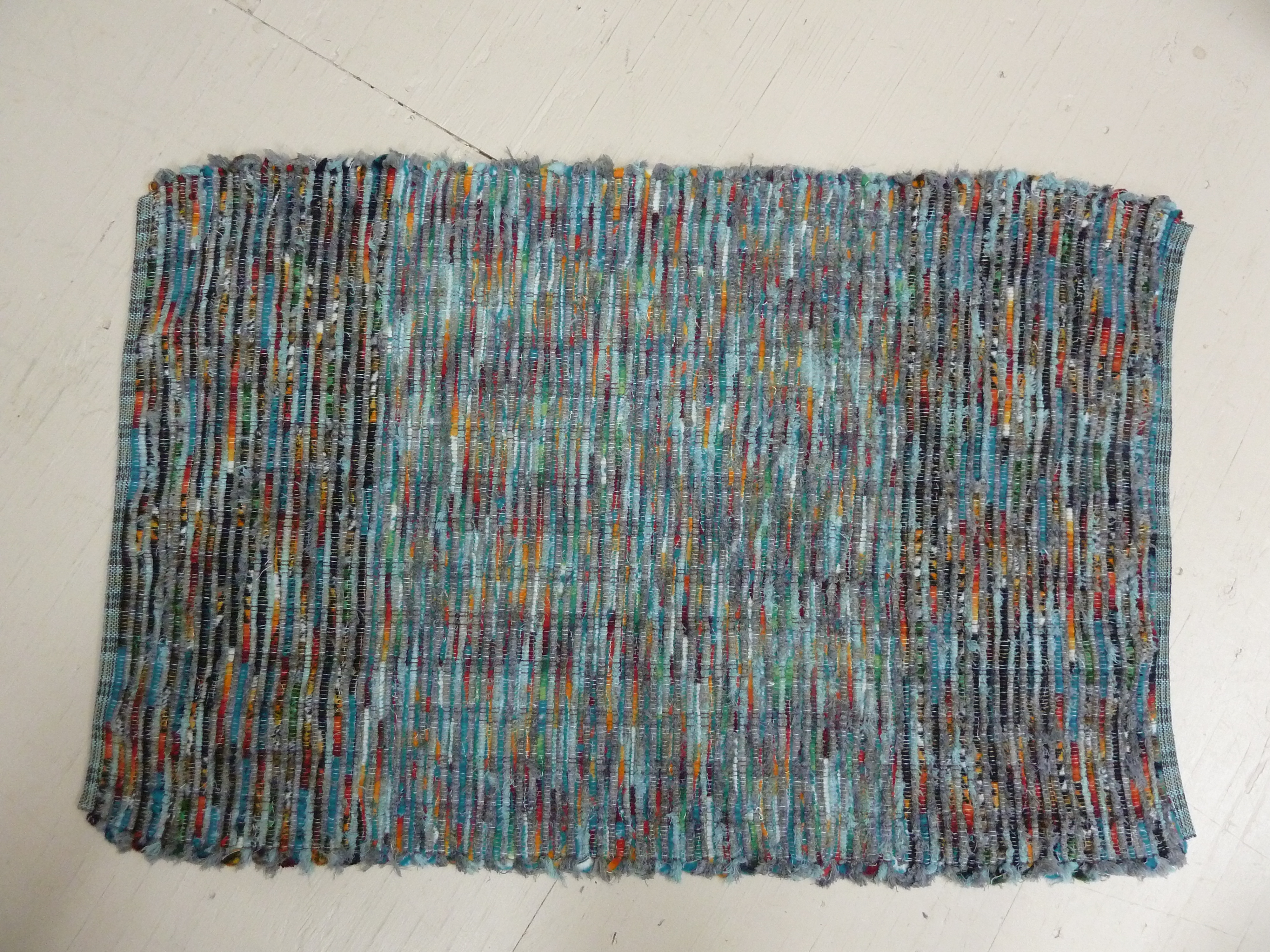
R155 - alternated with "worms" throughout, but changing colors

R155 – alternated with “worms” throughout, but changing colors

My rug numbers, by the way, (Rxxx) indicate the number of rugs I have woven since I bought my first loom about 6 years ago.  The woman I bought it from wove nothing but rugs, and she got me started.  That was all I did the first 6 months or so.

This week I finished three more, very similar to the ones I did back in June before weaving conference.

R156 - using same materials as R142

R156 – using same materials as R142

R157 & R158 - same materials as R140 and using up the last of it, too!

R157 & R158 – same materials as R140 and using up the last of it, too!

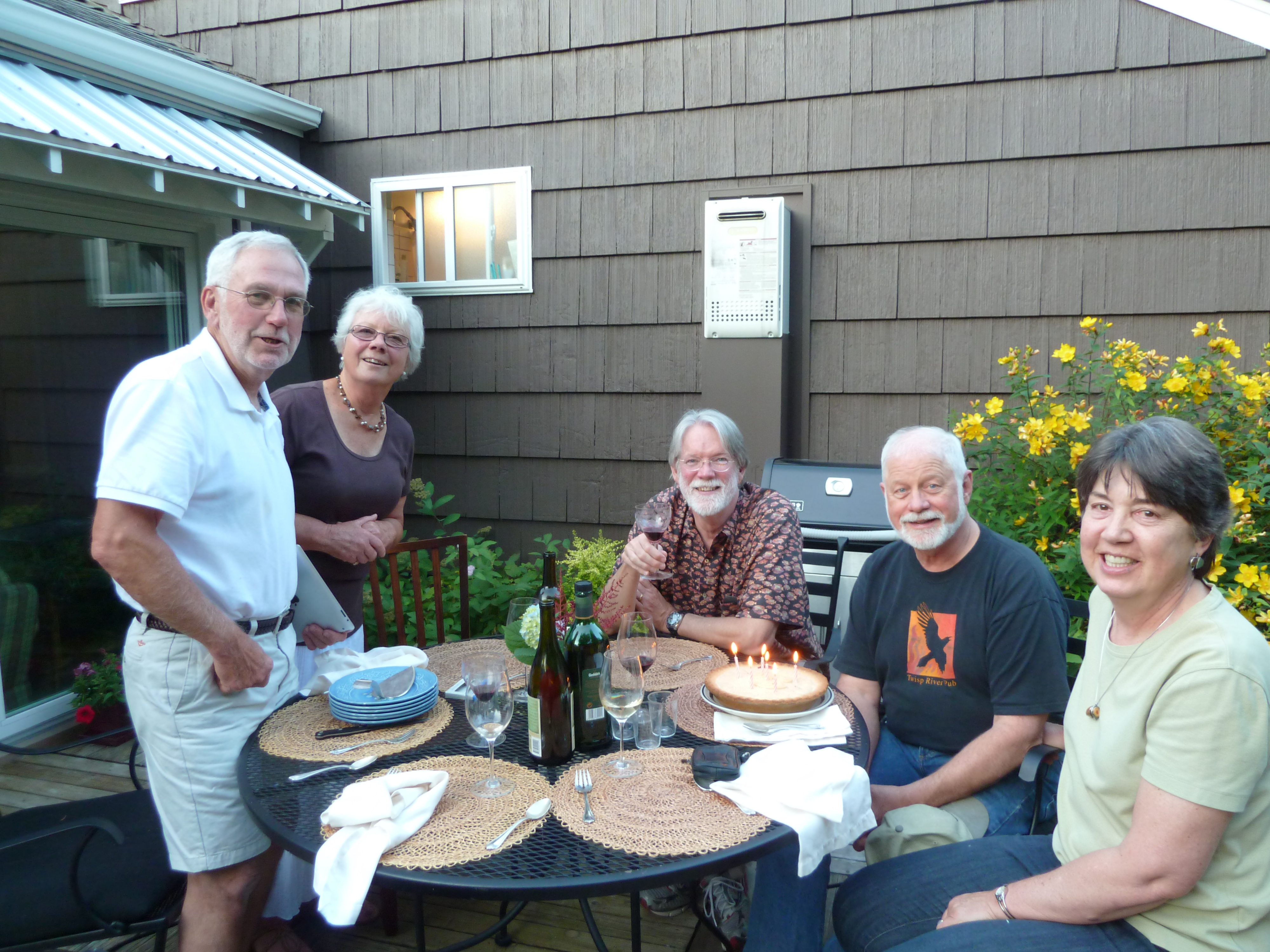
In between, we went to the coast to visit family & friends, and celebrate Rick’s 65th birthday.

Rick's 65th 1Rick's 65th 2

It’s been lovely here in the valley – we have had enough rain on and off to keep things relatively green.  There have been a couple of really hot spells (high 90’s) alternated with temps in the 80’s, thundershowers, etc.  We drove back into the valley last Sunday, coming over the North Cascades Hwy, to encounter a total downpour by the time we reached Winthrop!  By later that evening, however, the storm had moved off and it was back to warm and dry.

Read Full Post »

Tired But Happy

I got home yesterday afternoon after a week in Bellingham at the NW Weavers’ Conference.  What a week!  Western Washington University was the venue, and the grounds and staff were wonderful.  We were in dorm rooms (I opted for a single) so the accommodations were rather spartan, but the bed was comfortable and my dorm was quiet.

Tuesday through Thursday I took a 3-day pre-conference workshop with Kay Faulkner from Australia.  The title was “East Meets West:  Warp Faced Weaves”.  She had an article in the March/April 2013 issue of Handwoven magazine on Textiles of West Timor, including a project with sotis cloth, which was one of the types of patterns we were going to do.  Here is the workshop description:

“Most weavers look towards European and American weave structures for inspiration. Some real gems can be found in Eastern textiles. Warp faced textiles in SE Asia are usually woven on back strap looms but they often can be modified to suit multishaft looms. Analysis of ethnic textiles will provide some interesting additions of technique for the hand weaver. They include warp manipulation, warp wrapping, weft patterning on warp faced cloth. These techniques can then be combined with Western structures to achieve interesting cloth. Consideration will also be given to maximizing the potential of your loom while combining structures.”

It turned out the main effort in the class was designing your warp and getting it on the loom.  I decided to make an 8-inch wide piece, 4 yards long, so I could sample the techniques to be shown in class, and have enough left for 1-2 scarves.  Well, it took me almost 2-1/2 days to get the warp on the loom.  It is sett very closely so only the warp will show.  I was using 8/2 cotton, which means something to a weaver, and my sett was 60 epi (ends per inch).   8″ x 60 = 480 ends right?  Wrong.  It wasn’t until I started actually sleying and threading that I realized my fundamental error, in not taking into account the fact that you thread in pairs of 4 into 2 heddles – 2/2 for stripes in plain weave, 1/3 for the “Sotis” patterns.  So my 480 ends that I had labored over, keeping color order and all, was making a 16″ wide piece, not an 8″ wide piece!  No wonder it took me so long.  By the middle of the last day I was only this far:

sleyed, threaded and tied on - finallly!

sleyed, threaded and tied on – finally!

This was despite the fact I had spent 12 hours in the workshop room the first 2 days.  I was very tired and getting a little frustrated!  It also turned out it would have been much easier to warp the loom from back to front, but by the time she explained that, it was too late for the way I had wound the warp in my usual way for front to back.

On the third day of the workshop, she was demonstrating various techniques, so I tried to take notes and some pictures while she was doing it.  The workshop handout was brief and somewhat cryptic.  Fortunately, there were some women from Seattle Weavers Guild in the class, who were farther along than I was, so I also have some folks to go to with questions.  I did get started on the first set of patterns before we had to pack up on the last day.  And I am excited about my warp, I really like the colors and if I can work my way through the techniques, I should be able to make the rest of it into placemats.  So stay tuned for progress and pictures in the coming month.

Here are some pictures of workshop projects under way:

P1020741 P1020742 P1020743 P1020745 P1020746

Meanwhile, it was fun hanging out with my friends who had also come over for workshops, and meeting new people.  A number of people from the Methow Valley guild came over on Thursday for the actual conference, which includes 3 half-day seminars as part of the registration.  The fashion show on Thursday was fabulous, many wonderful garments, and beautifully presented with music.  These garments were moved to the Western Gallery in the Fine Arts building on campus, where the Instructor Show, Open Show, and Juried Show exhibits were also to be found.

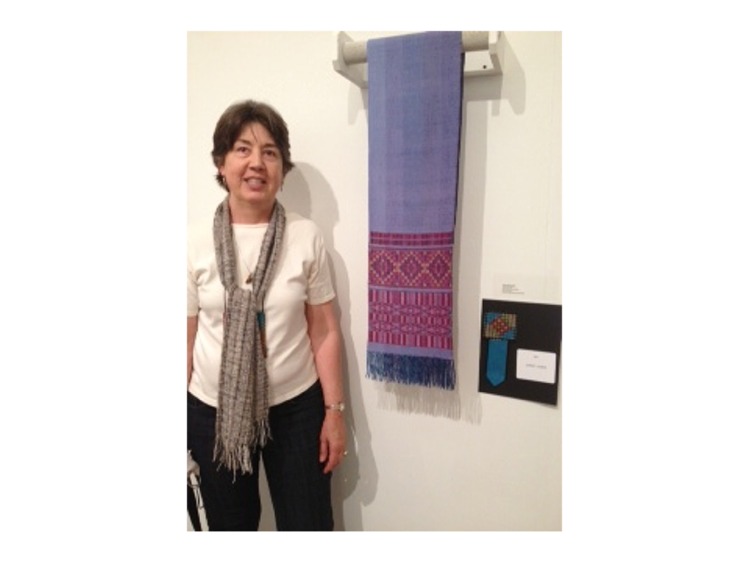
So speaking of the Juried Show, I had two of my polychrome summer & winter scarves accepted for that show.  I had been pleased that the juror, Bhakti Ziek, had written some very nice comments on my entry forms when they came back to me.  Well, as it turns out, she also gave me an award!  Juror’s Choice 1st Place!

P1020756

and here is a picture my friend Deb took with her iPhone:

ANWG 2013 awardI took all three half-day seminars from Kay Faulkner as well, as they had sounded the most interesting when I registered back in January.  There were no handouts and lots of information, but I think I got enough of it to feed my brain and creative side for the next year or two.  Tied weaves, double weave (way beyond the basics) and loom-controlled shibori.

There was also a market with vendors big and small.  I behaved myself pretty well, but did come home with a few tools (including a used LeClerc electric bobbin winder) and some lovely alpaca from Vancouver Island, for future spinning projects.  Morrison Creek Alpacas, highly recommended.

Read Full Post »

I am leaving tomorrow for a week-long weaving conference in Bellingham, WA.  It is the NW Weavers Conference 2013, sponsored by ANWG – the Association of Northwest Weavers Guilds.  I am taking a 3-day pre-conference workshop on Tuesday-Thursday, then the conference itself starts on Friday.  It included some mini-workshops (I signed up for 3 half-day workshops on Friday and Saturday) plus a whole slew of other events.  So I will file a report in a little over a week!

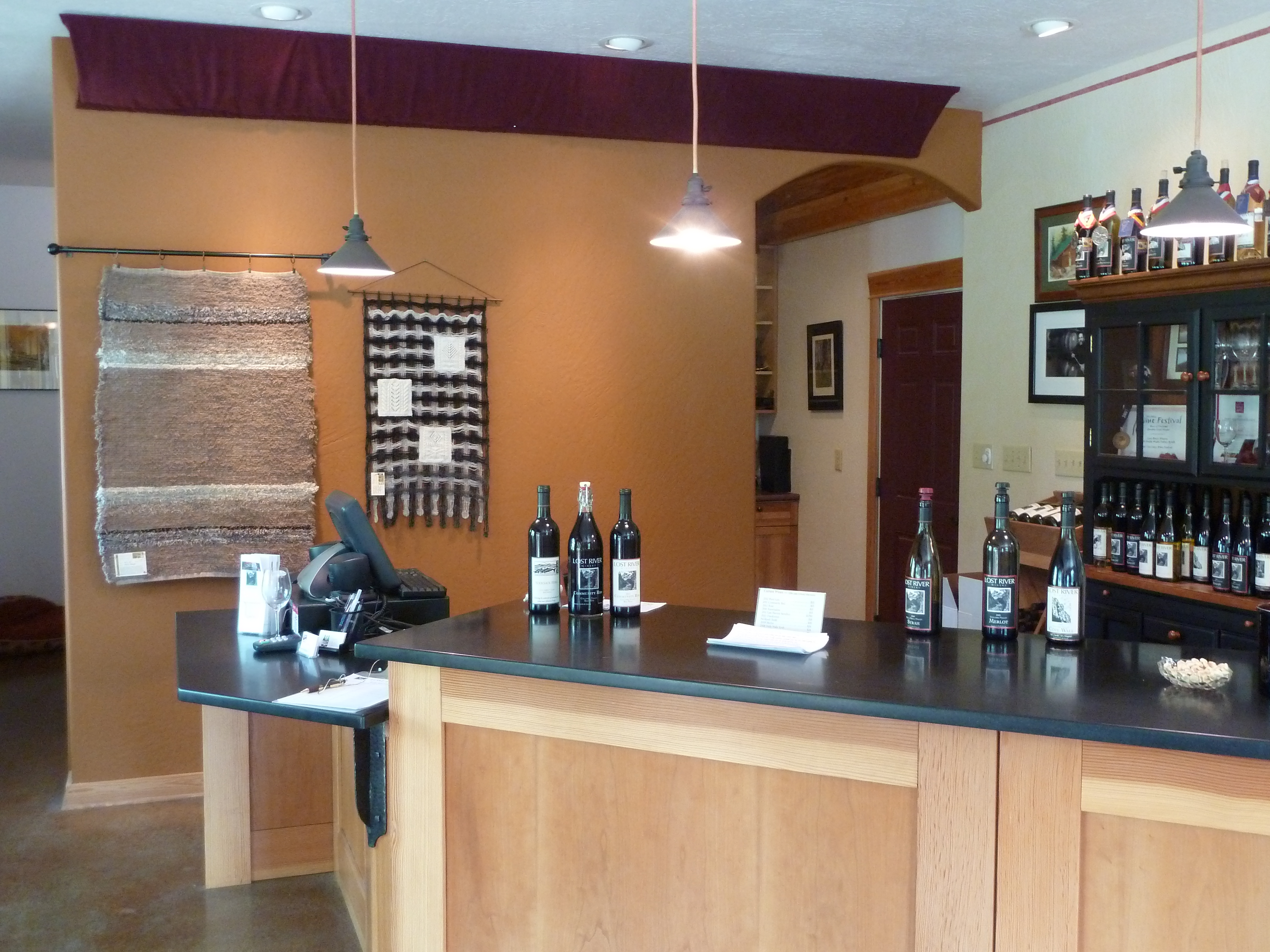
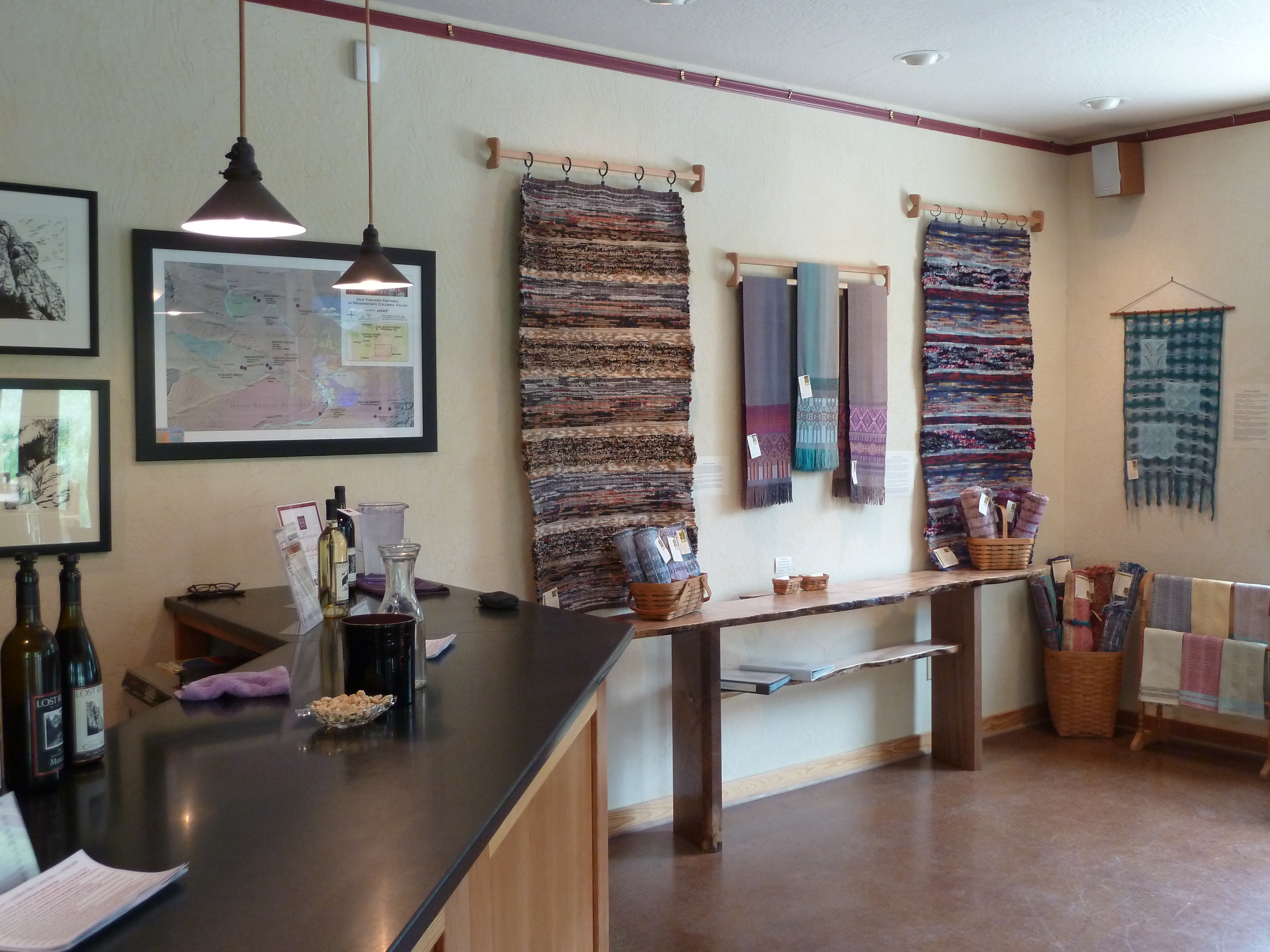
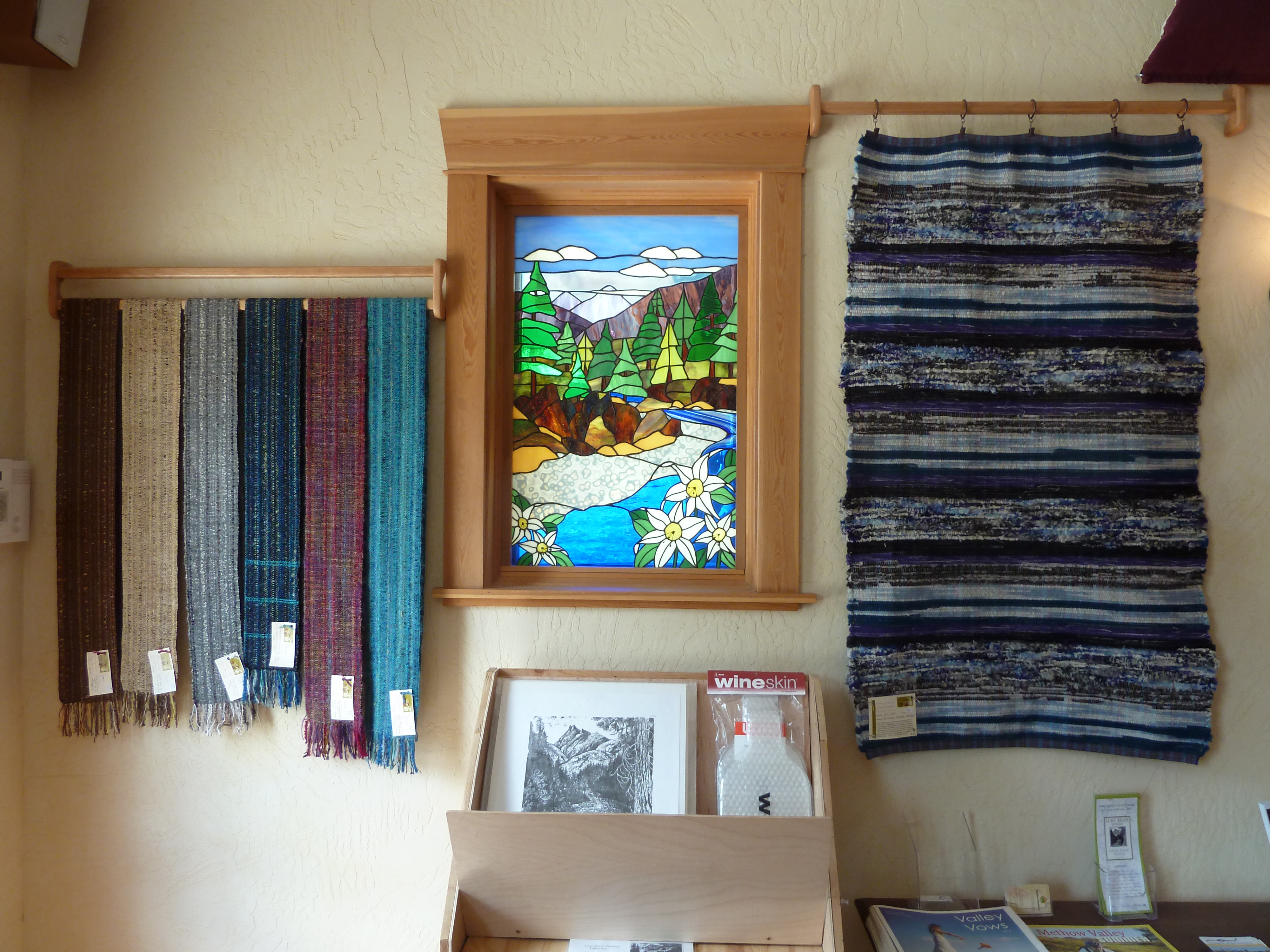
Meanwhile, here are some pictures of the three rugs I finished this week, plus some shots from our exhibit at the Lost River Winery tasting room in Winthrop.   It is on the North Cascades Hwy just west of Winthrop (26 Highway 20).  Hours for the summer: Thursday through Monday 11-5 pm.

Here are pictures of the three rugs I took in the studio before taking them up to the tasting room yesterday.  They are all woven with a mix of smooth (“wooly worm”) scraps and fringed selvages I get from the Pendleton Woolen Mill Store in Portland, OR.  I pretty much have to pick these out whenever we are down there, as you never know what they are going to get in from the mill in Pendleton, OR from week to week.  The “wooly worms” are just dumped into a big rolling bin, and I have to go “dumpster diving” (a very dusty affair) to pull out wads of the colors I like.  The fringed selvages come packaged in plastic bags, but as I said, you can’t predict what they are going to have at any moment in time.

R140

R140

R141

R141

R142

R142

and here are some pictures I took this morning up at the tasting room:

back wall behind the tasting bar

back wall behind the tasting bar

main wall to right of tasting bar

main wall to right of tasting bar

on the left as you enter the tasting room

on the left as you enter the tasting room

Rick's entry table from live edge Western Bigleaf Maple and East Indian black walnut

Rick’s entry table from live edge Western Bigleaf Maple and East Indian black walnut

Do notice the beautiful display hangers Rick made for me, using cherry, for both rugs (using drapery ring clips) and scarves.  They are suspended from the picture railings above with fishing line.   He will finish up the wine cabinet (in clear vertical grain fir) this week, so I will get a picture when I get back from conference!

Read Full Post »

Why yes….

I have been weaving.

Rick and I are exhibiting our work at the Lost Rivery Winery tasting room in Winthrop from mid-June to mid-September.  Toward that end, I have been trying to build inventory!  Down at the weaving guild room, on my 40″ Macomber, I wove another set of undulating twill towels, 13 out of a 12-yard warp.

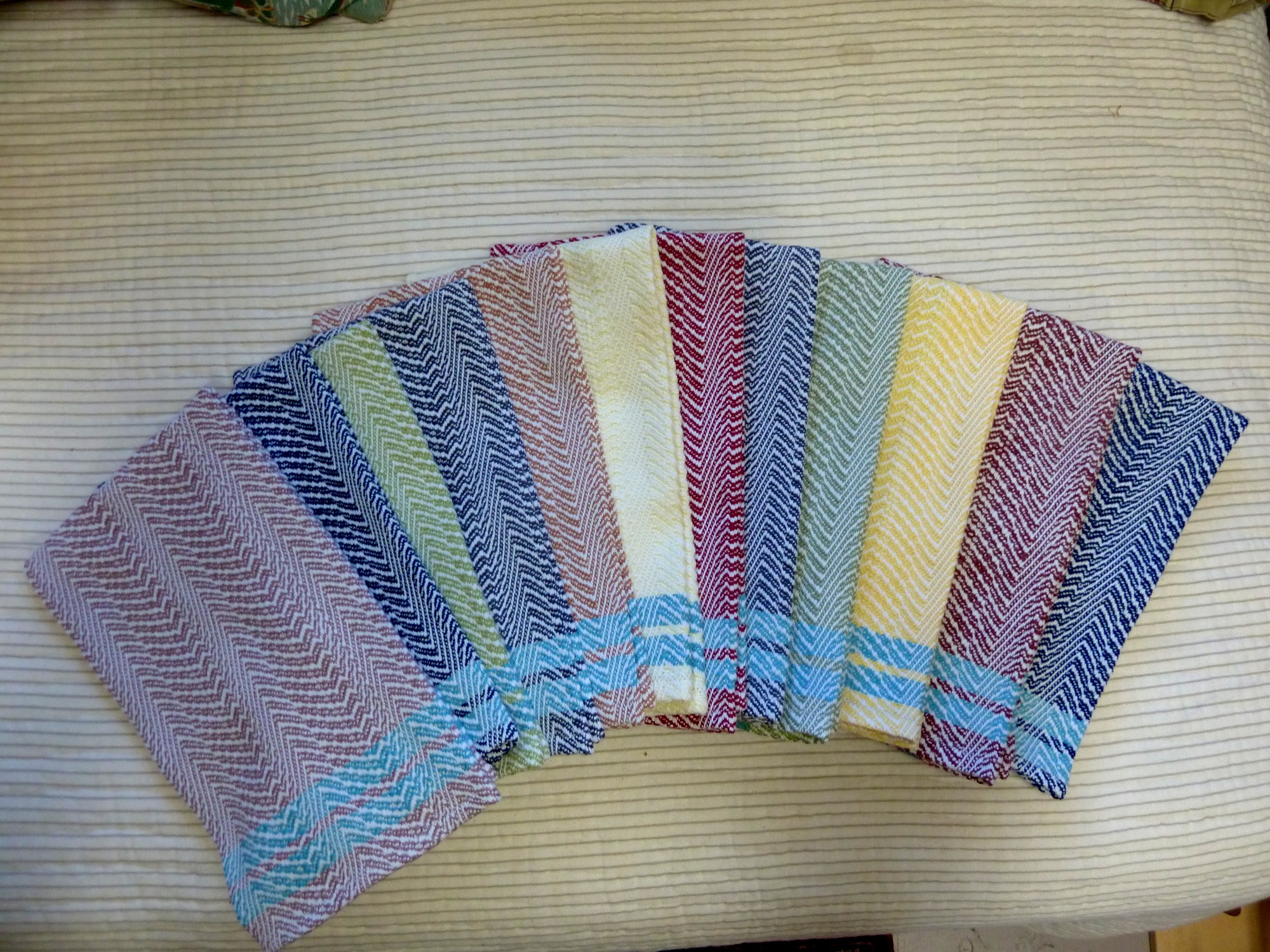
These were the first four, I am not sure I ever put up a picture of them finished:

soft gray stripe Apr 2013

and these are the ones I just finished:

turq. stripe Apr May 2013

At home on the 32″ Mac, I wove another round of placemats on a blue warp.  I got 17 out of a 12-yard warp.  Eight of the ones on the left, and eight of the ones on the right, plus one other I did with a different fabric but did not get a picture.  Four of the ones on the right have been donated for a fundraising “gala evening” and auction on July 13 for Confluence Gallery & Art Center in Twisp.

blue warp May 2013

This week on the 48″ Mac at home, I finished 3 rugs that are the ones I really wanted to do for the Lost River Winery exhibit.  I finished the third one around 10 pm last night, and today hemmed and washed them, so they are drying as I write this.

We set up the exhibit at the winery tasting room this morning and it looks good.  I hung 3 rugs as temporary place-holders for the ones drying now, and on Saturday we will go up and swap them out.  I will get pictures then.  Rick brought up his entry table made from the beautiful western bigleaf maple log, and he has a wine cabinet underway that won’t be finished for another week or so.

Airstream update: Rick took the propane tanks up to Okanogan County Energy (our electric and propane suppliers) and had new valves put on the tanks so they conform to current standards.  Then we had the propane technician come by yesterday and check all the gas appliances in the trailer.  Everything works!!  Water heater, 4 burner cook-top, wall oven and refrigerator/freezer in propane mode.

Tomorrow we tow it to Spokane to the Airstream dealership for a checkover and possible repair of some things, depending on what they find and how much it costs.  We will leave it there for several weeks.


Read Full Post »

Two new warps, actually!  Blogging has lagged behind all the activity around here lately, but I will try to catch up this week.

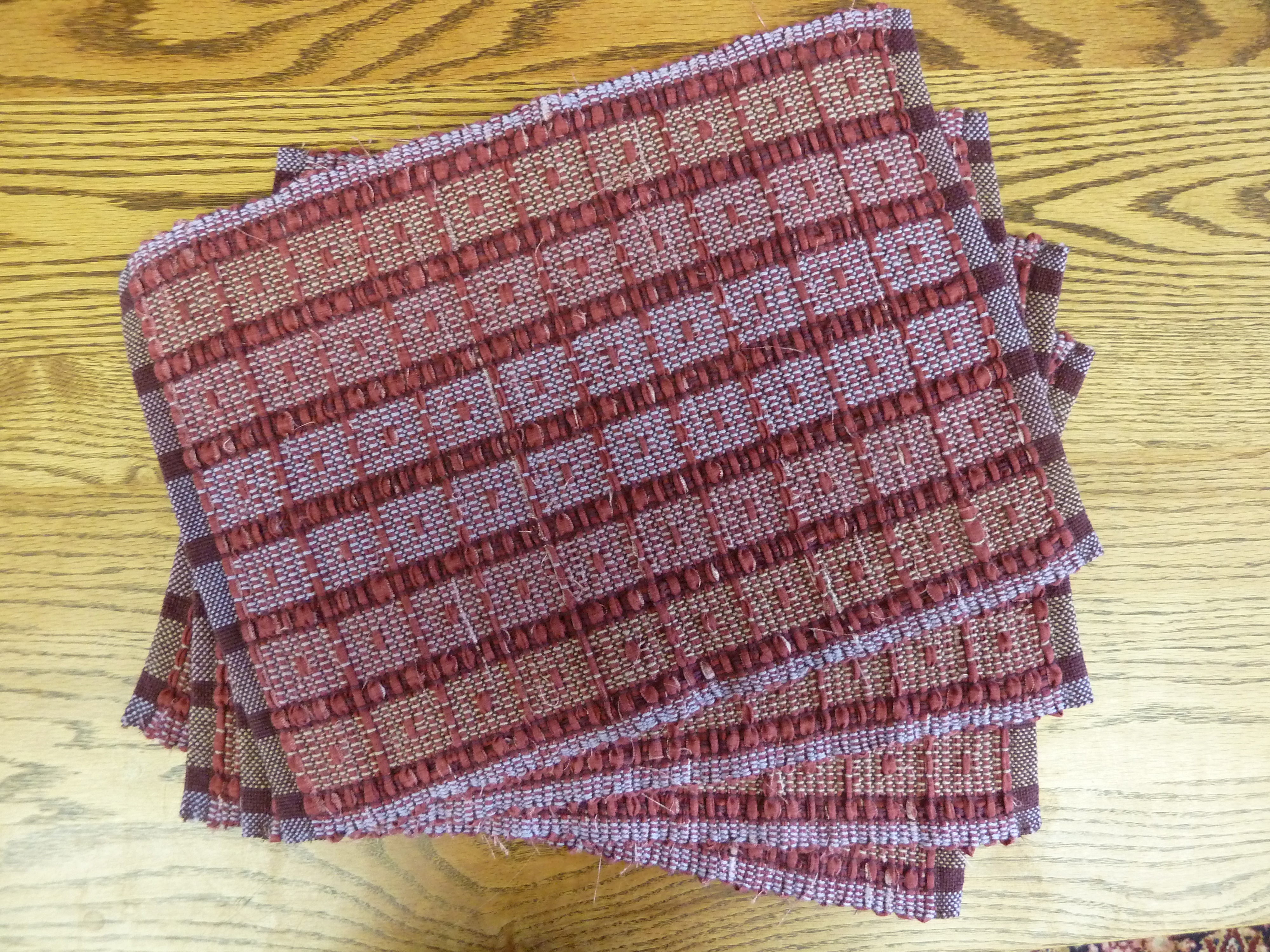
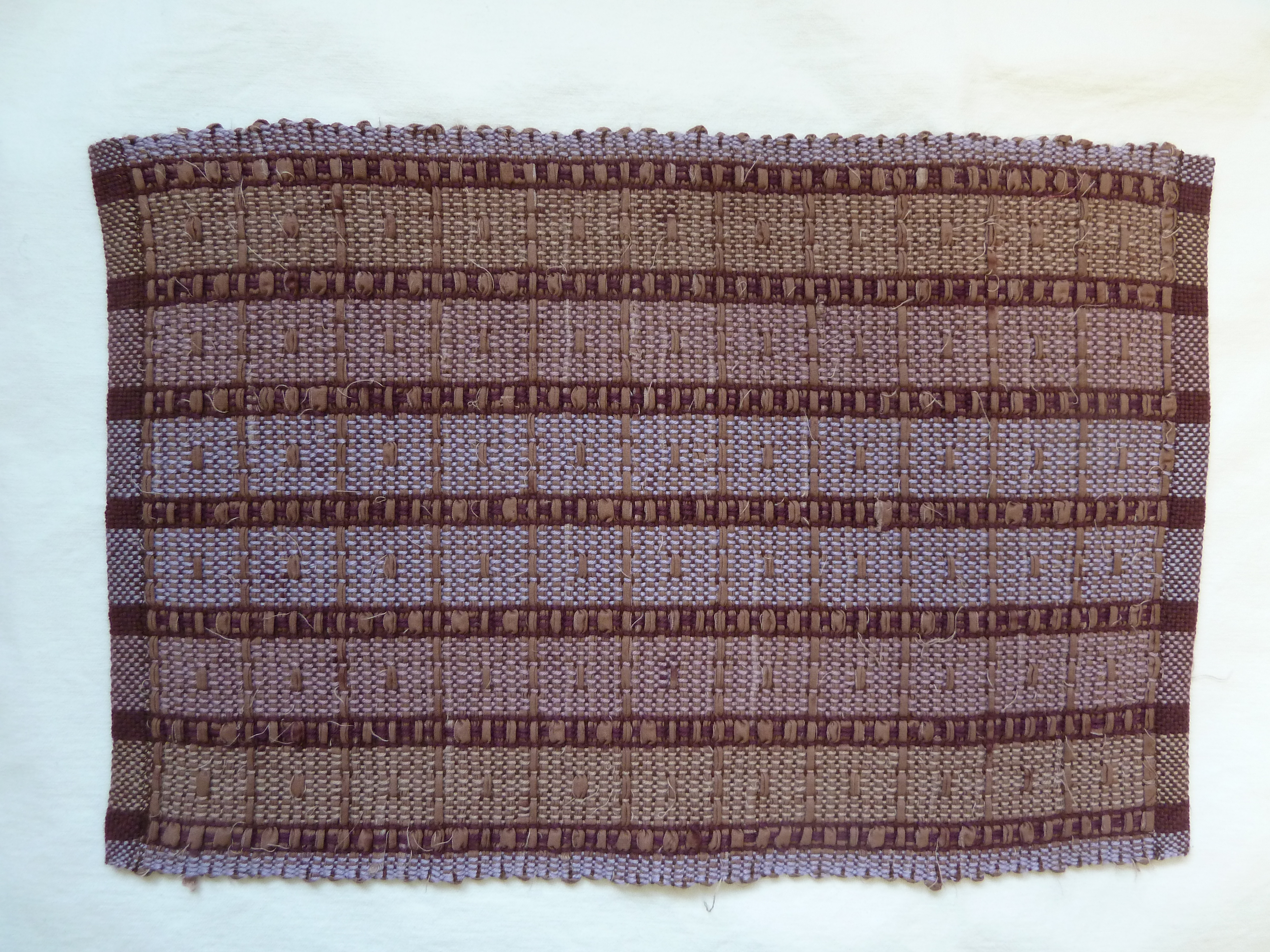
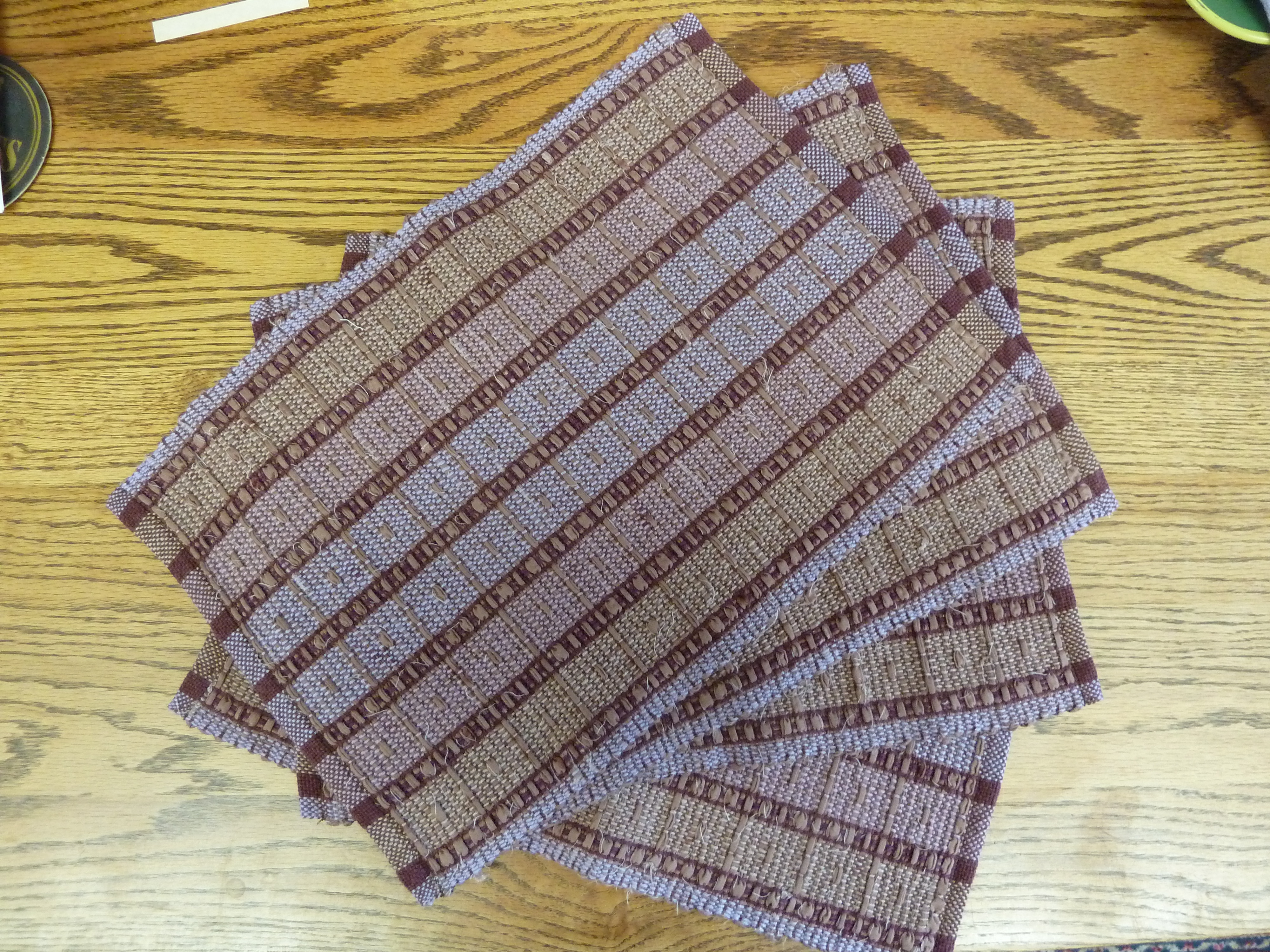
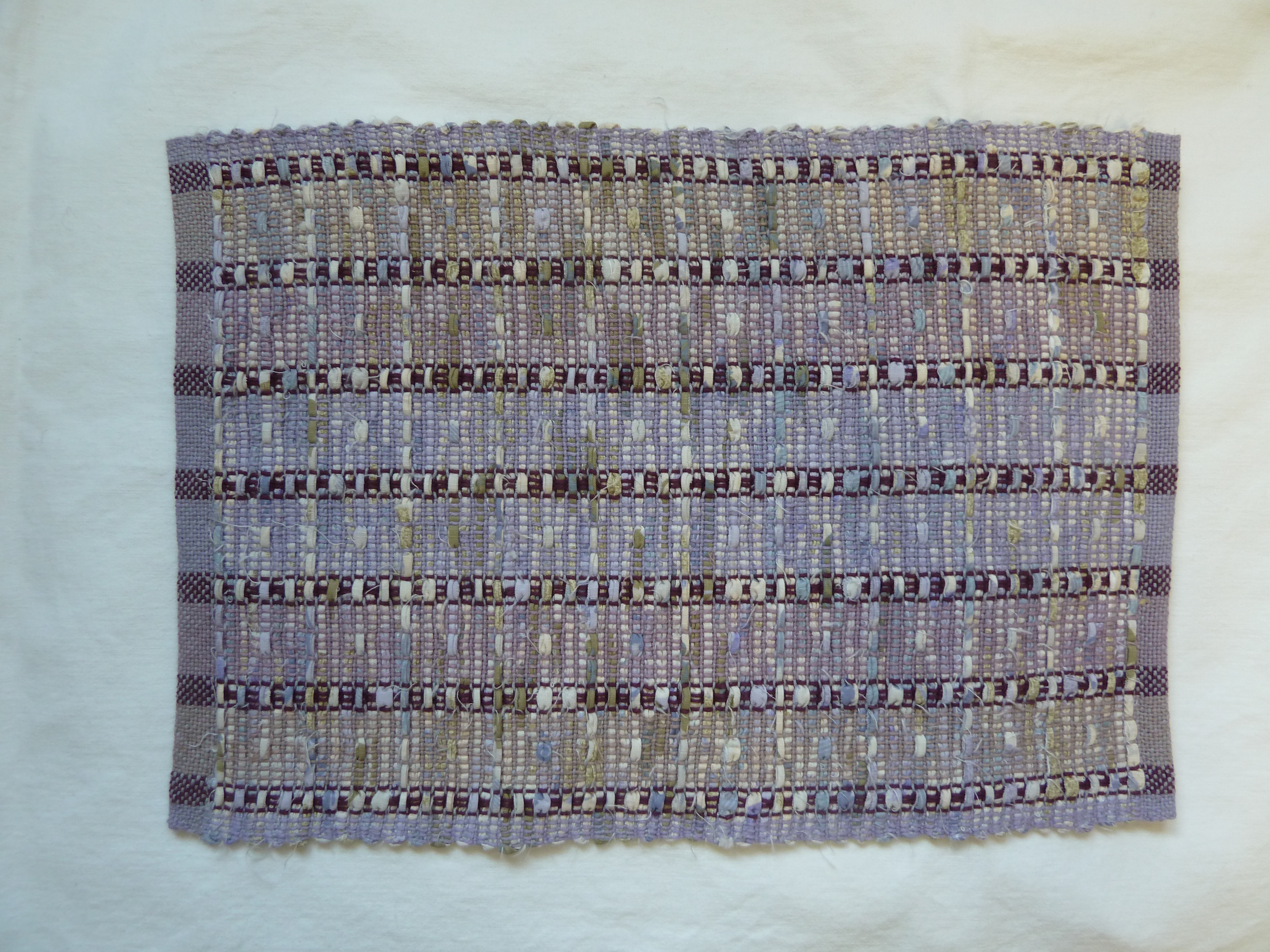
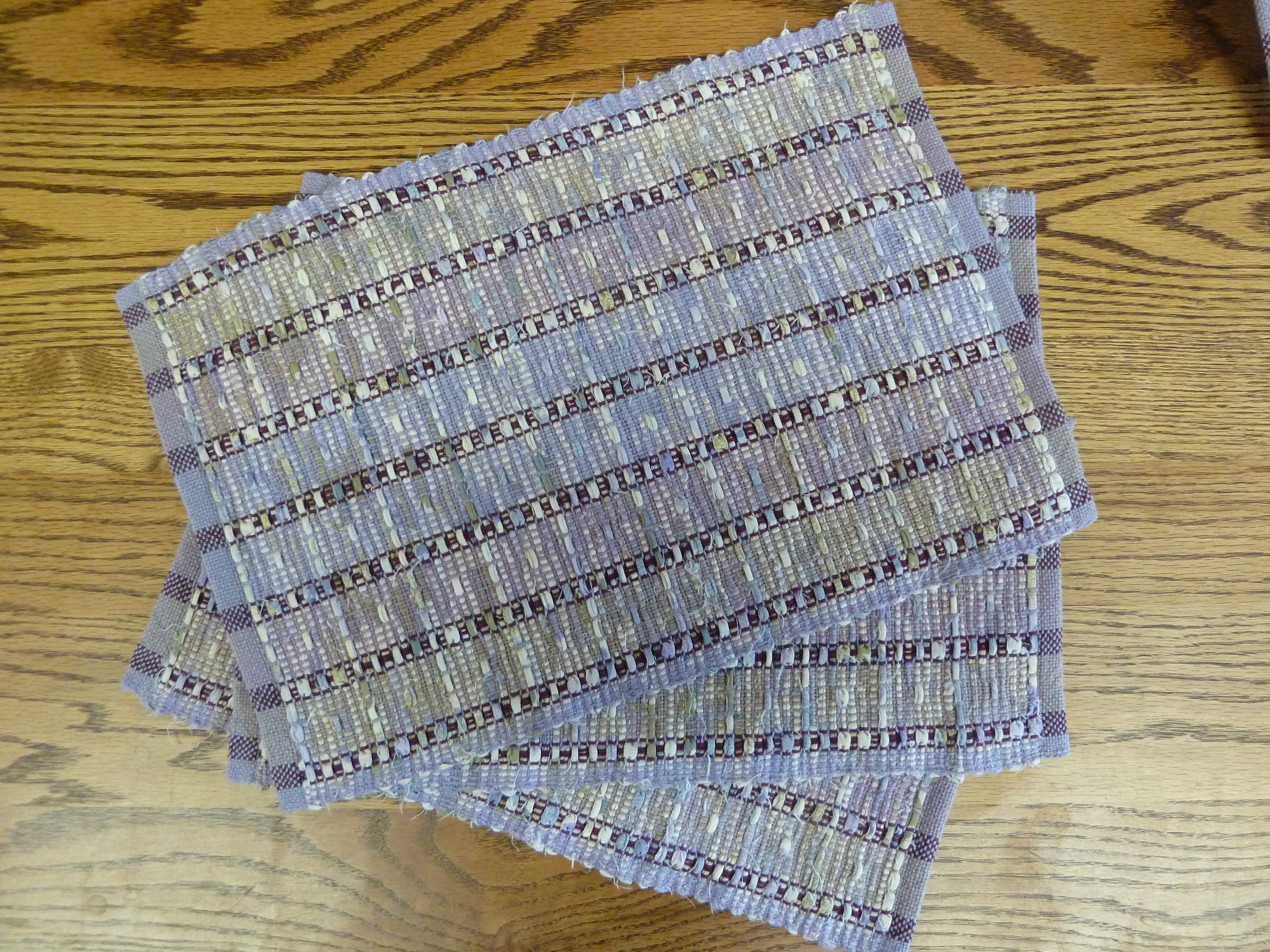
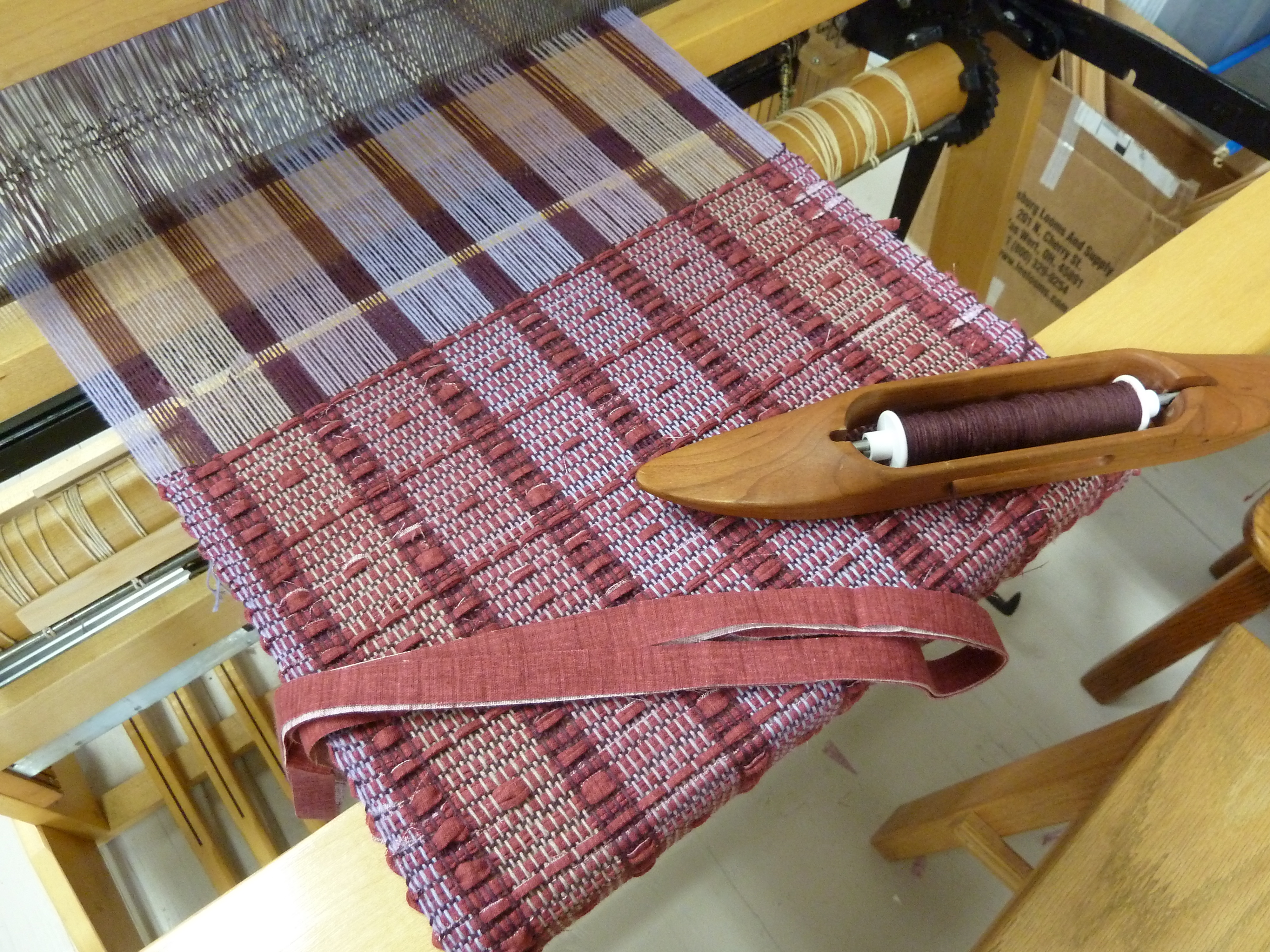
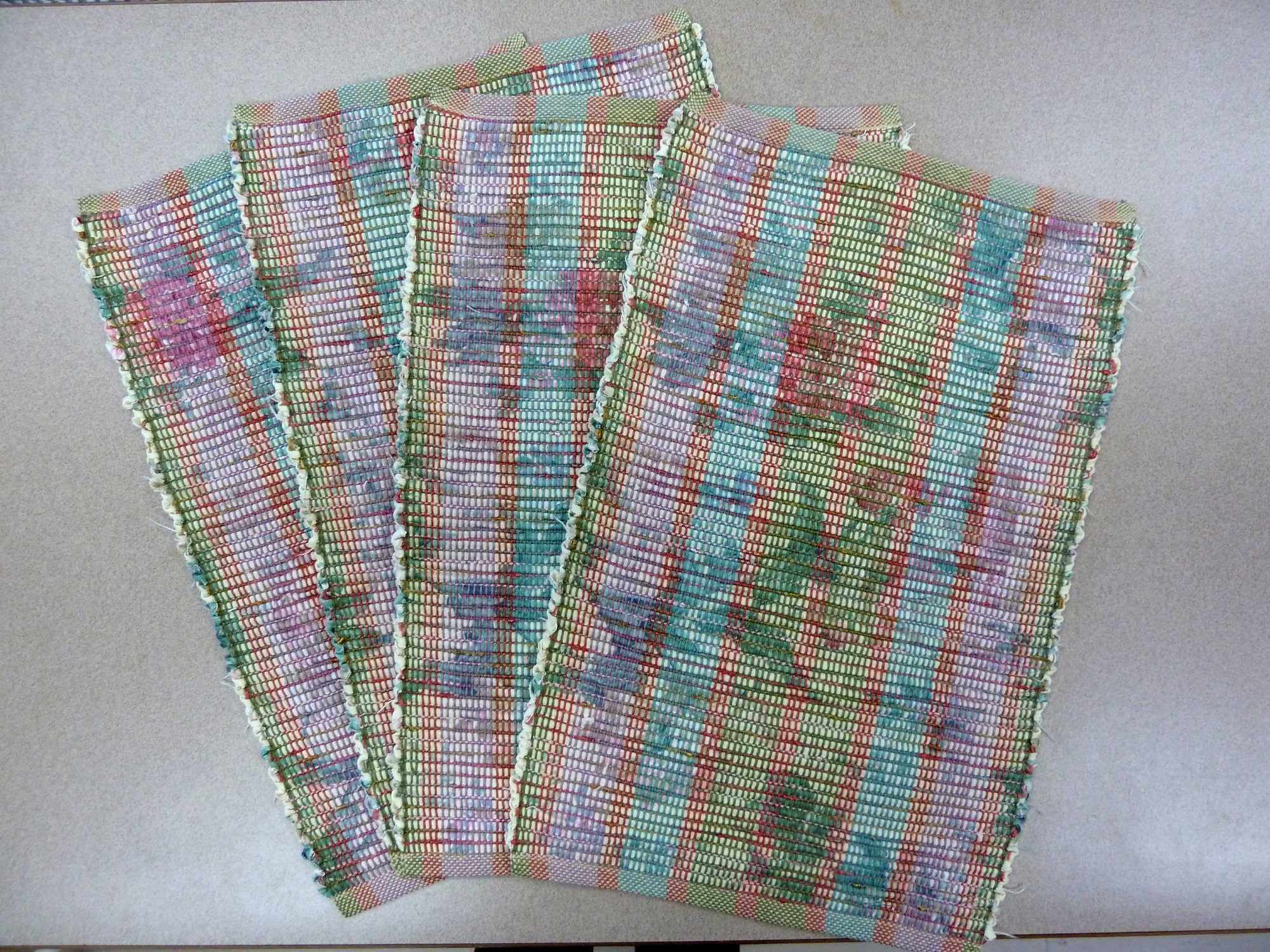
First, here are pictures of the placemat sets I finished a week or two ago.  These were woven using the Bronson lace threading with alternating shots of thick (1/2″ fabric strips, light cotton fabrics) and thin (8/4 cotton carpet warp).  All were woven on the same warp, again showing how much the color of the weft determines the final look.

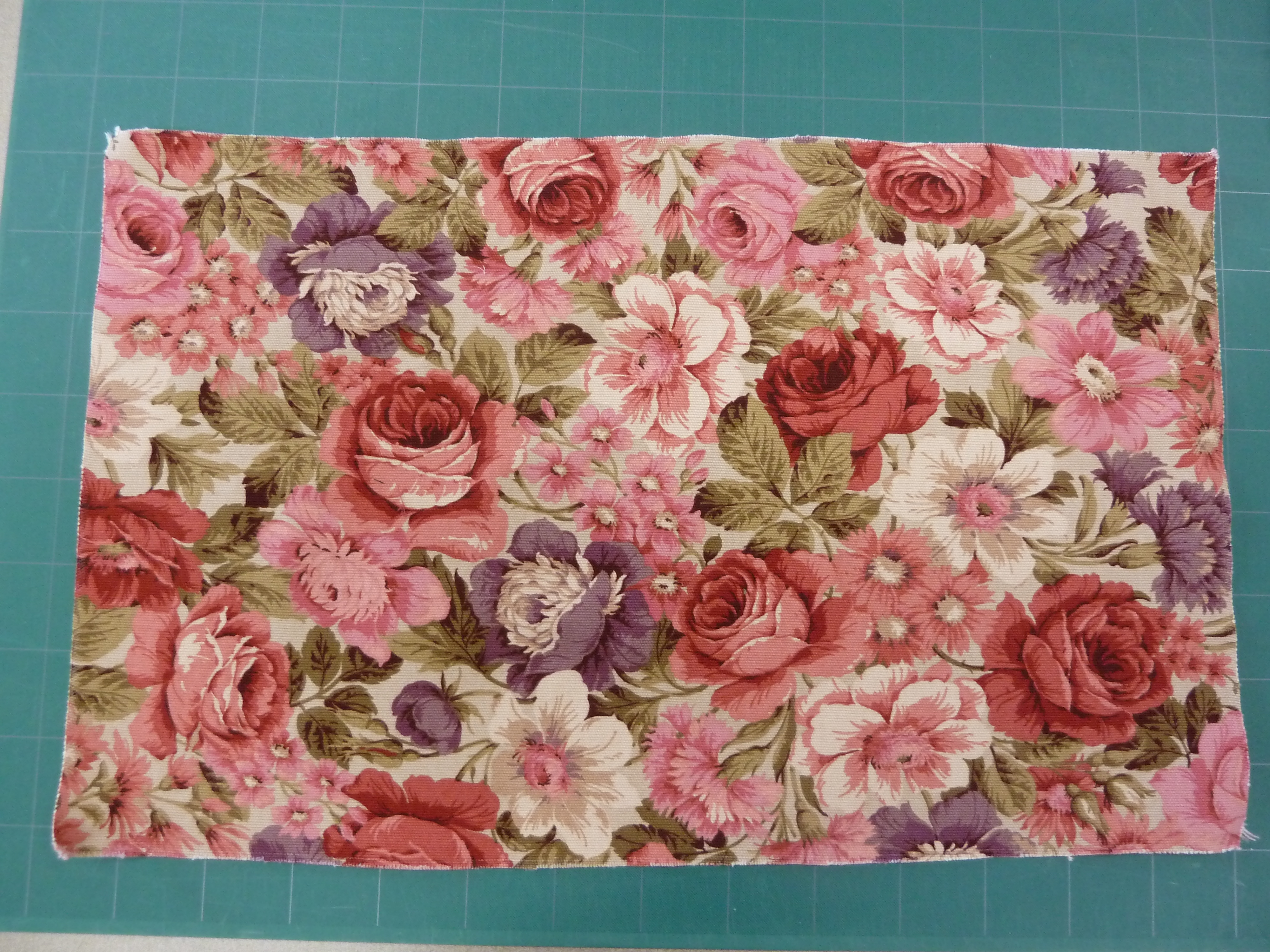
burgundy fabric

burgundy fabric

P1020613

rosy brown fabric

rosy brown fabric

P1020606

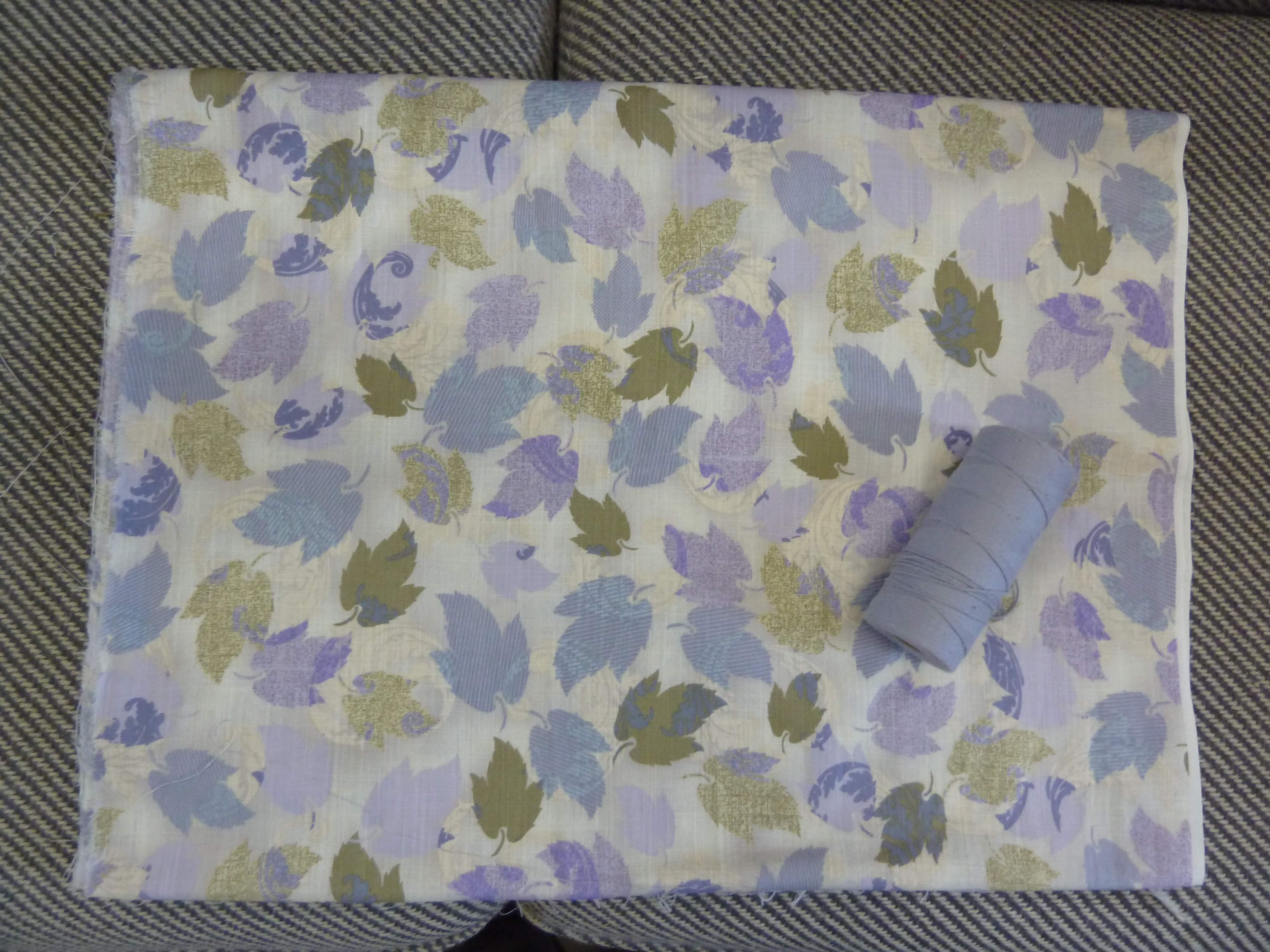
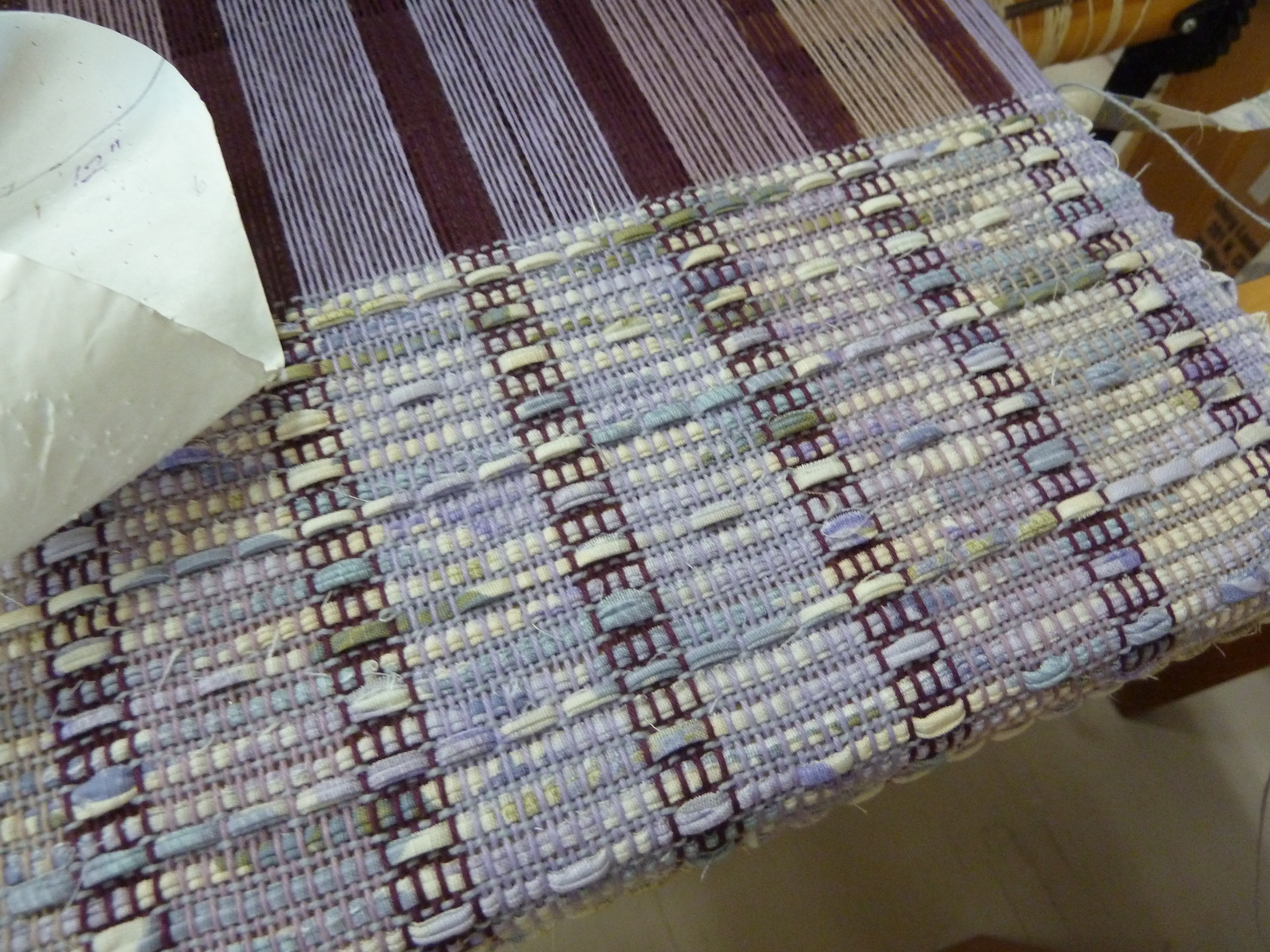
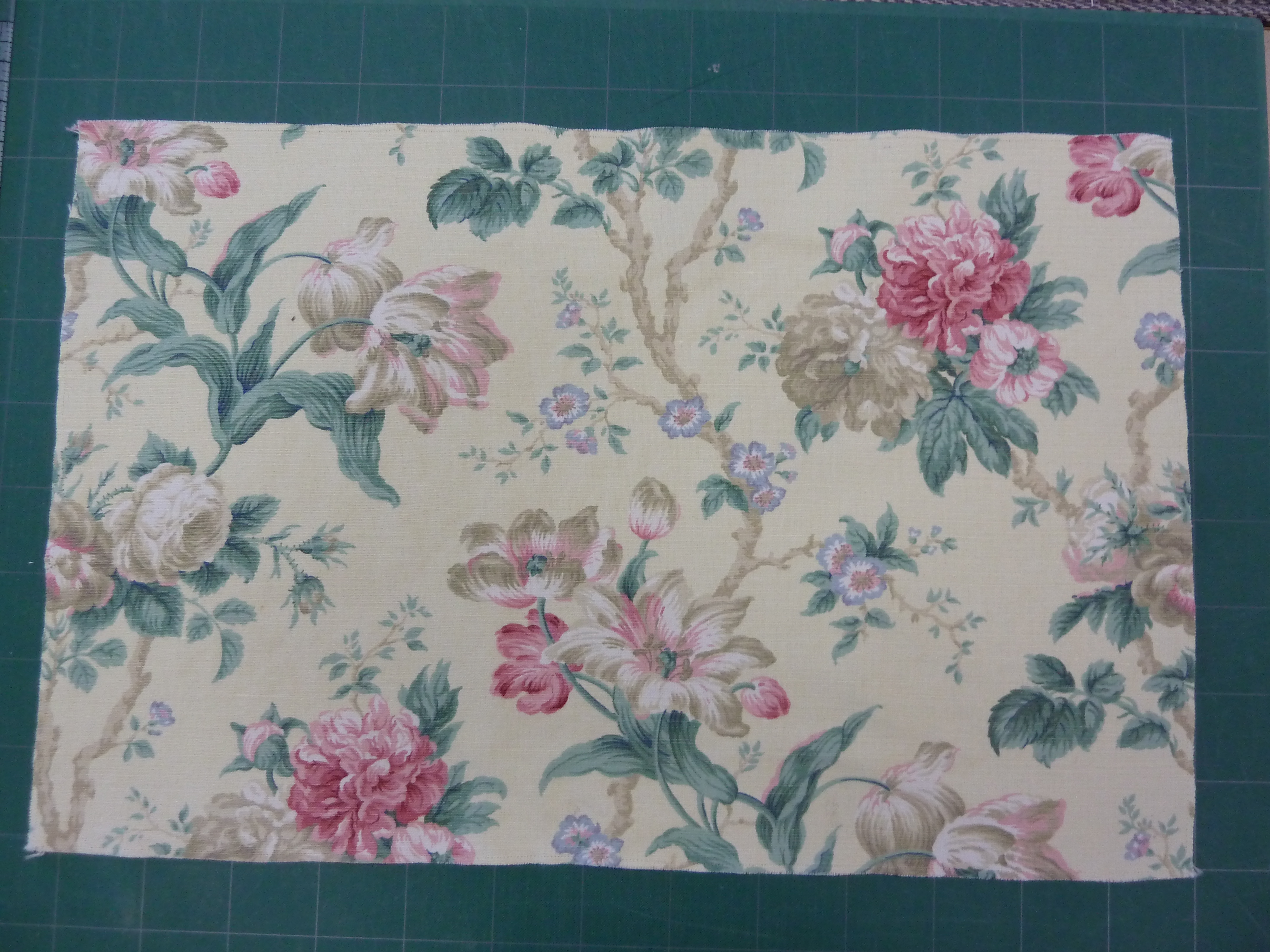
lilac, cream, beige floral print

lilac, cream, beige floral print

P1020609

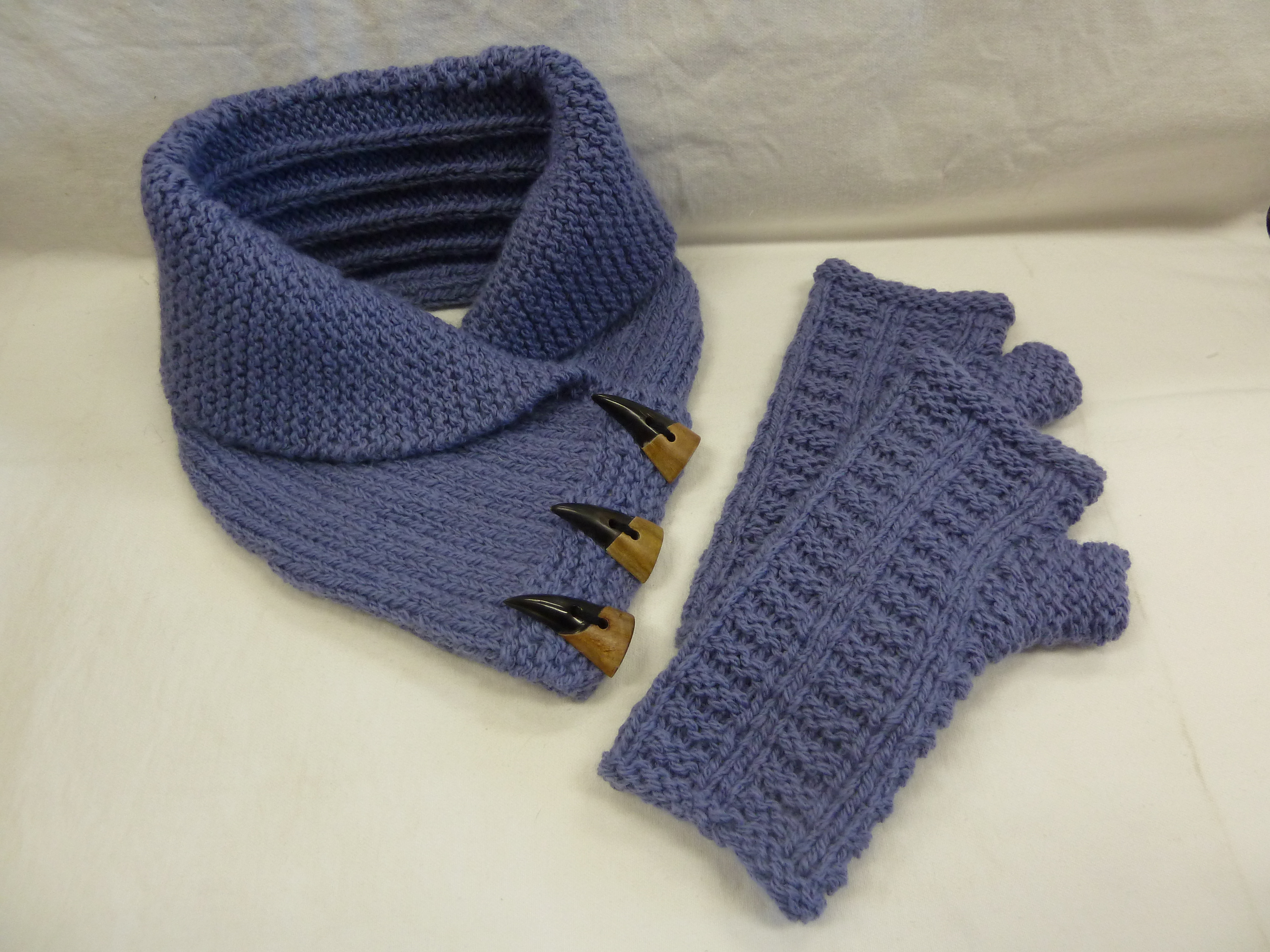
I also knit up another Shawl-Collared Cowl by Alano Dakos in Cascade “Cloud”, a heavenly blend of merino and baby alpaca – but unfortunately one skein was not quite enough to make the cowl, so I had to buy another one.  Therefore I also made a pair of fingerless mitts using a pattern found on Ravelry:  Integral Mitts by Danielle Chalson.

P1020603

The set was donated for the upcoming dinner and auction to raise funds for Little Star Montessori in Winthrop.

So on to the new warps!  At home, on Kingston the 2nd, I put 12 yds of 8/4 carpet warp in blue tones, for another round of placemats:

P1020614

And at the weaving guild room, on my 40″ Macomber, I put on a towel warp to try out a new idea I found in Handwoven magazine.  It is an 8-harness pattern, using 8/2 matte cotton and cotton flake yarns, with a straight twill at each side and an undulating twill of irregular shape, across the middle section.

P1020615

an undulating twill towel - underway!

an undulating twill towel – underway!

P1020619

I just finished and took off the 4 towels from this warp yesterday, got them washed and dried, but still need to hem them.  Pictures coming!  The warp set-up was a bit of work, but they are relatively quick to weave.  I plan to get some mileage out of this setup by tying on one or more additional warps in other colors, as I really like how they are turning out.


Read Full Post »

We went down to College Station, TX two weeks ago to meet up with my sister’s family and see their younger daughter defend her dissertation and become a Ph.D.  Her subject has to do with Lyme disease, and she is in the Dept. of Microbial & Molecular Pathogenesis – needless to say , we didn’t understand half of what her talk was about!  But it was a great visit with family, my sister and brother-in-law, both nieces and one of their best friends from childhood.

P1020573

And of course, no matter where you go, there it is:

P1020575

It was a pretty nice little wool shop, actually – had some local alpaca products, although none of it came home with me – I need more knitting and spinning fiber like I need a hole in the head.

Since we came home, spring is definitely coming along – bunch grasses growing in the yard, lots of shooting stars this year too.  Our friends from Lake Quinault came over for 4 nights and brought their bicycles.  The day they meant to go out for a long ride was, of course, the day a storm moved through!  Lots of wind, cold, rain and sleet down here in the valley and snow up higher.  We made a fire and settled down with books, instead.

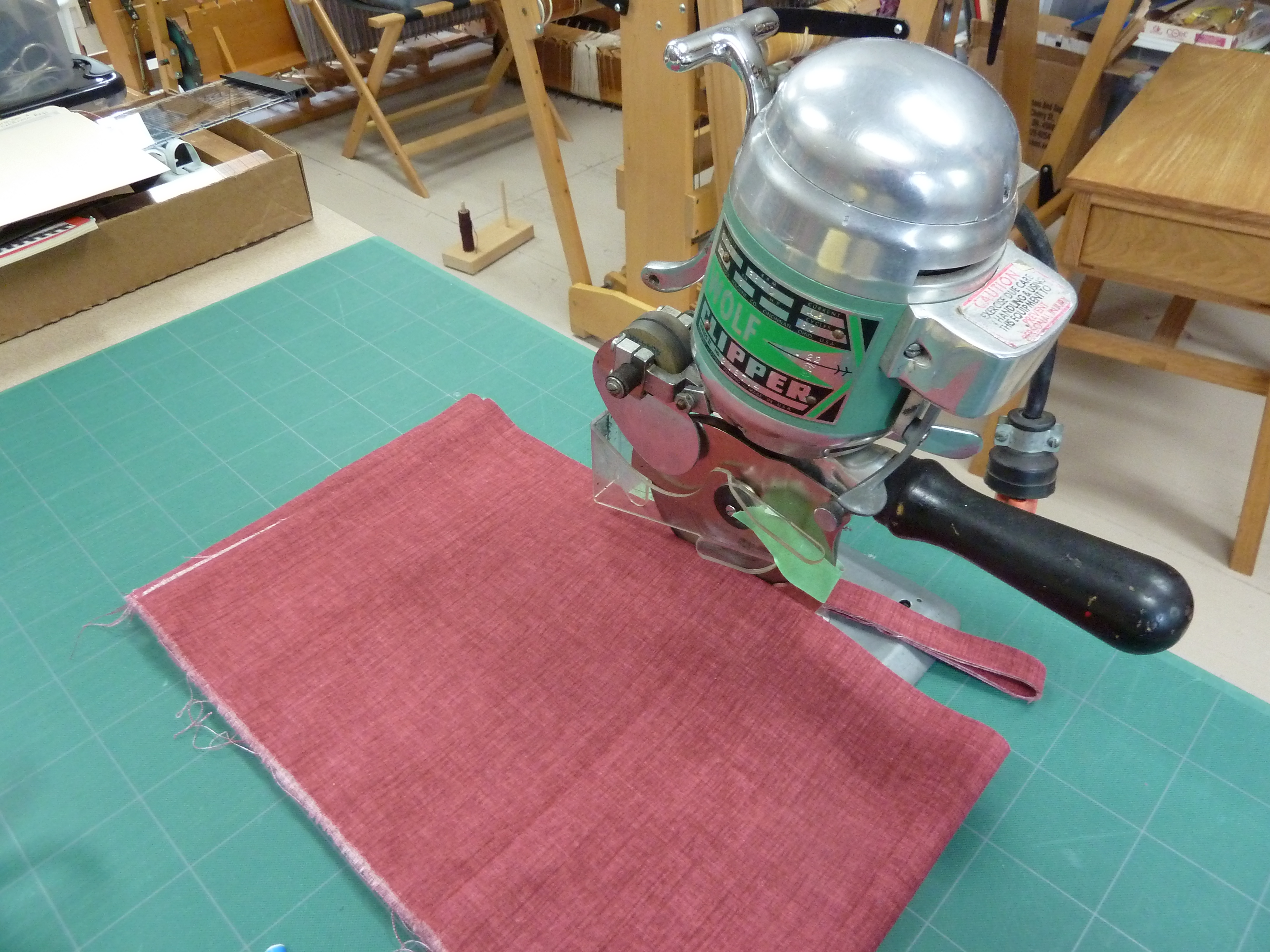
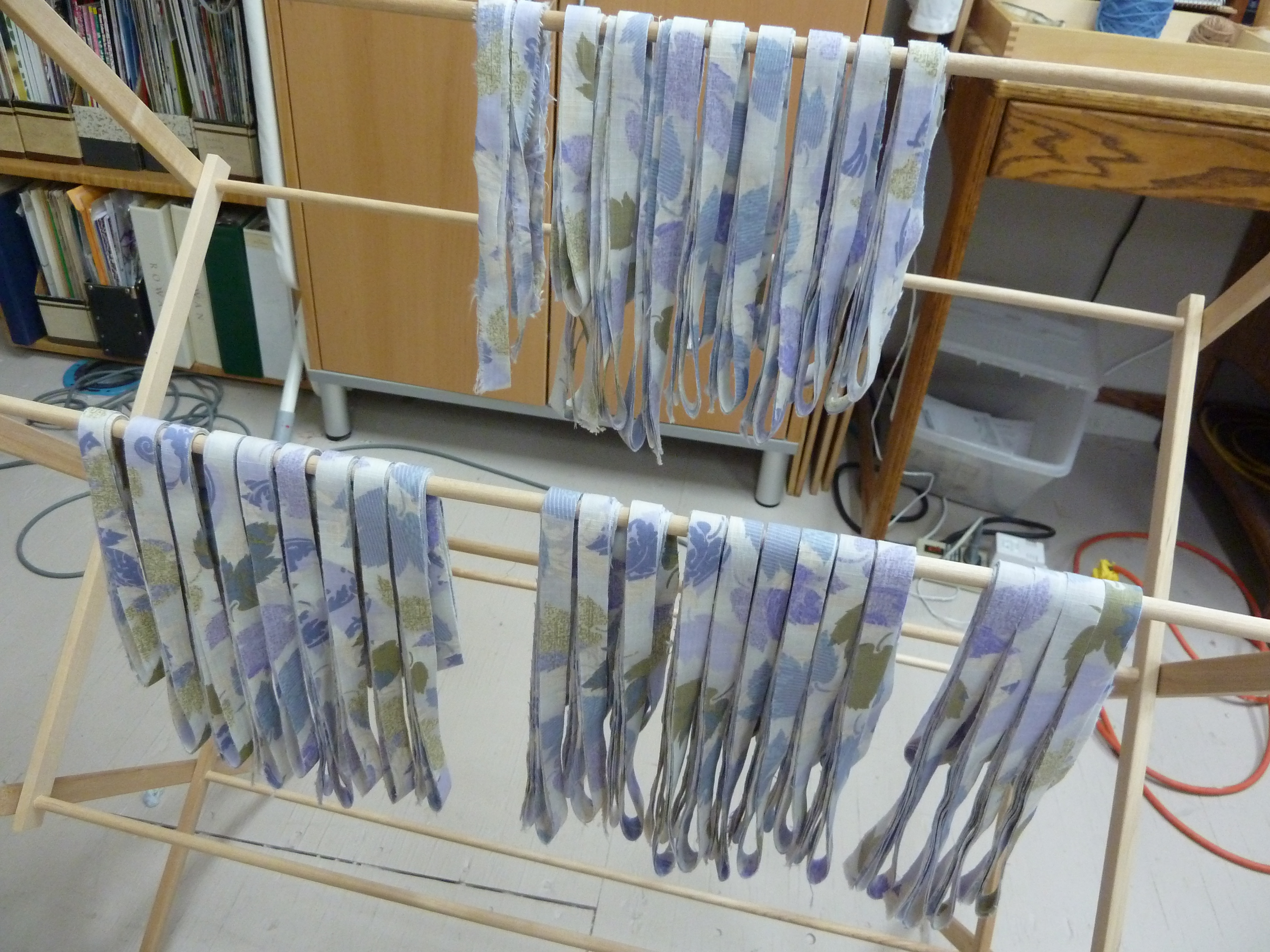
I have been weaving away on the Bronson lace style of placemats to finish up the warp I put on before we went to Texas.  This time I am using cotton quilting type fabrics, cut in 1/2″ strips and used singly.  The placemats are coming out a lot better, not as thick and with more pattern repeats.  I should finish them up today or tomorrow, meanwhile here are some “progress photos”.  I used my “new” Wolf cutter to cut the strips – it slid through 8 layers of fabric like a hot knife through butter.  Lovely.  No distortion, goes as straight as an arrow – I love it.

fabric 1 being cut

fabric 1 being cut

fabric 1 being woven

fabric 1 being woven

fabric 3 and cotton yarn used for tabby

fabric 3 and cotton yarn used for tabby

fabric 3 cut into strips

fabric 3 cut into strips

fabric 3 being woven

fabric 3 being woven

Read Full Post »

A year ago I bought a 32″ Macomber loom from a woman in Kingston, WA and blogged about it here.  I named it “Kingston” because that is where it came from, and I liked the sound of it.  I have really been happy with Kingston, it is a great weaving width for doing scarves, towels, shawls etc. and then I can devote my wider 48″ Mac to rugs, blankets, and so forth.  But I have been a little frustrated with the fact that it only had 4 harnesses (4H), thus restricting the types of patterns I can weave on it.  In fact, I have had to use my “Baby Mac” model CP portable workshop loom, which is 20″ wide and has 8 harnesses, to do the polychrome summer & winter scarves, and the placemats I have been doing lately, for exactly this reason.  It is a lot smaller (not as comfortable to sit at for a long time) and just not as beefy as a full-size loom, so really wasn’t what I wanted for a long term solution.

Most B4/B5 model Macs can take up to 10 harnesses (10H), and I intended to add 6 more to Kingston “eventually”, but that is a big chunk of change and I just hadn’t taken the plunge.

Then about a month ago I got wind of someone in Seattle who had a 32″ Mac with 12 harnesses for sale.  In other words, exactly the same loom as Kingston, but with 12H instead of 4H.  I emailed her to explore the idea of buying hers, and selling mine, but I wasn’t sure if this made any kind of sense, or how hard it would be to sell Kingston.

It turns out she is getting a wider, multi-harness countermarch loom (new) but she really liked the 32″ Mac and she suggested we swap looms as she would be happy to have a simpler version (plus some money, of course).  So for a fair amount less money that it would cost to upgrade Kingston to 10H, I now have a “new” Kingston with 12H!  Also, it is newer – Kingston was built in 1961 and this one was built in 1995.  And, she didn’t care about having the sectional warp beam, so I was able to keep the one which came with Kingston!  Regarding the history of the new loom, she bought it from a young woman who graduated with an arts degree and an interest in textiles, who later moved on to other things – this loom had been a graduation gift.  So I am the third owner at this point.

So right after we got back from Port Townsend and the Olympic Peninsula, we made a one-night trip over to Seattle with the cargo trailer and made the exchange.  Both parties are quite happy!

I had a warp on the Baby Mac to finish off, but yesterday and today I put the first warp on the new loom.  It may be called “Madison” (it came from Madison Valley neighborhood in Seattle) – but I really like the name Kingston, and they look so much alike, it may just continue to be “Kingston”.

new Kingston 1

new Kingston 2

a "California Rags" placemats underway

a “California Rags” placemats underway

from this fabric:

fabric 3

Here are the fabric and resulting “California Rags” placemats I finished up on the Baby Mac last week:

fabric 2

fabric 2 all four

Wierd weather department:

After some lovely sunny days, bringing on lots of new green grass and shooting stars coming up in our yard, we awoke to this today:

April 7, 2013 spring snow!

April 7, 2013 spring snow!

It did all melt eventually….


Read Full Post »

My local weaving guild, Methow Valley Spinners & Weavers, is affiliated with a larger organization called ANWG, or the Association of Northwest Weavers’ Guilds.  This is an association of fiber arts guilds located within the Pacific Northwest area of the United States and Western Canada.  Every 2 years there is an ANWG Conference with seminars, fashion show, exhibits, vendors etc.  The first one I went to was 4 years ago in Spokane, Washington; then 2 years ago in Eugene, Oregon.  This year the 2013 ANWG Conference will be at Western Washington University in Bellingham, Washington – June 17-23.

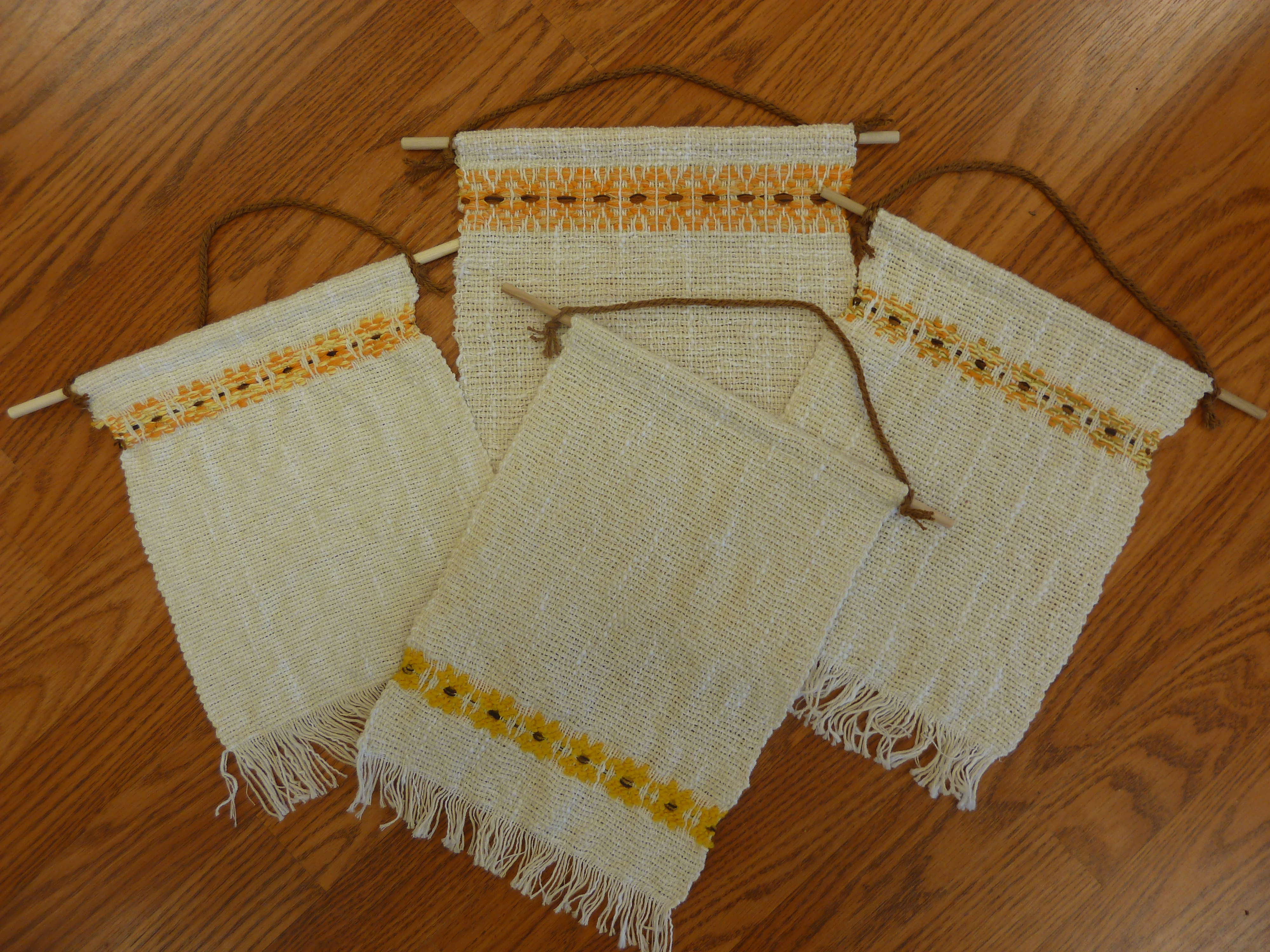
In a moment of perhaps temporary insanity, our little guild decided to make something really nice for the “goodie bags” they hand out to conference attendees.  We decided to weave earring hangers with an arrowleaf balsomroot motif, that being the signature flower of the Methow Valley.

arrowleaf balsamroot

arrowleaf balsamroot

We committed to ANWG last fall to make 400 of these, and they have to be done and sent off by April 20th.  Since then enrollment at the conference has exceeded expectations, being past 500 now I believe.  However, we do the best we can.

We have done 430 of them!  And that’s with only maybe 10-12 people really working on it.  Besides warping and weaving, we must wash and finish them, serge them apart and sew a hem for the dowels, cut and sand the dowels for the hangers, make cording out of brown yarn for the hangers,  and finally we will roll them up and put an informational wrapper around each one.

They are all a little different

They are all a little different

Big pile of finished hangers

Big pile of finished hangers

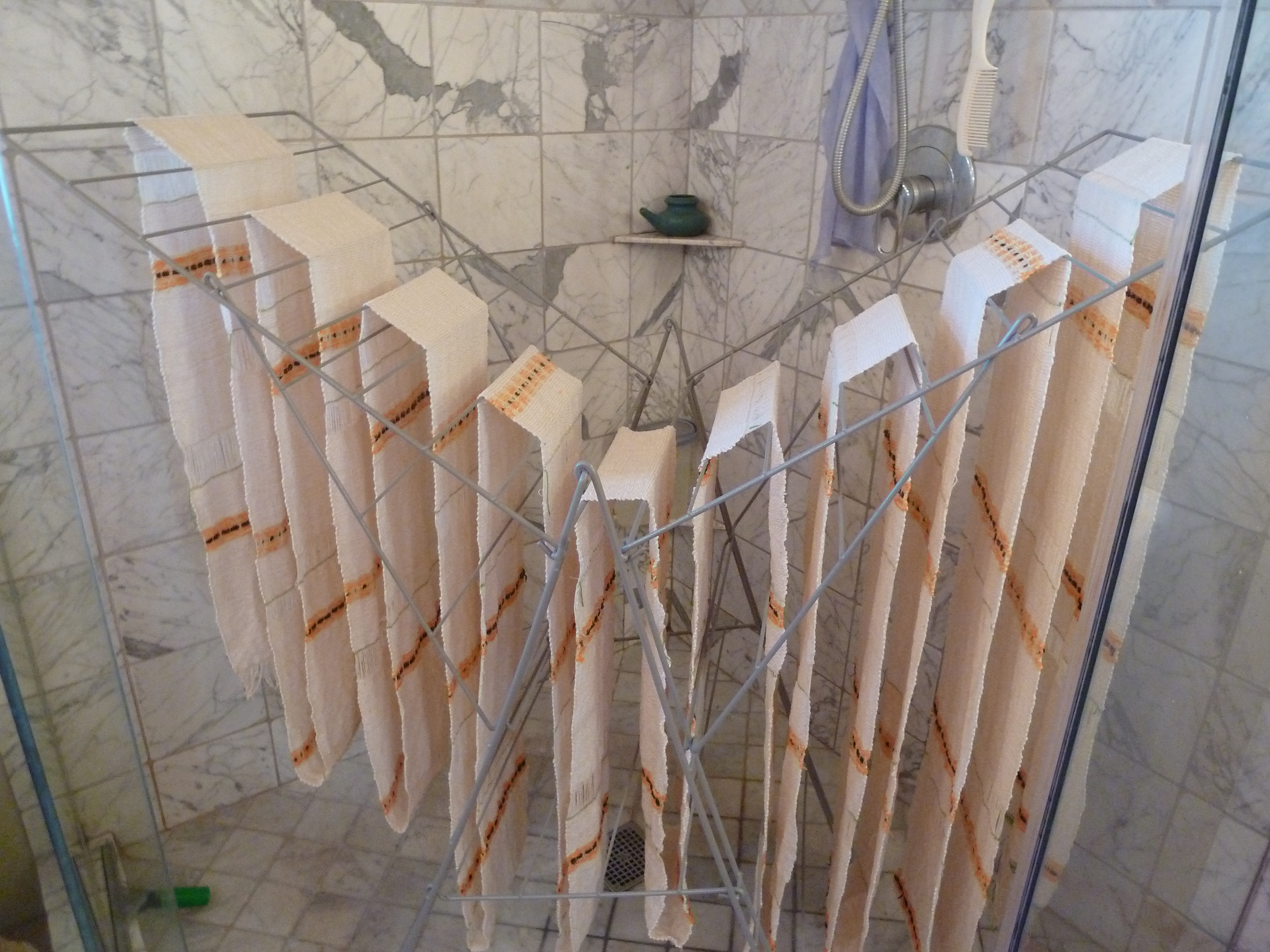
47 of them hanging to dry in my shower

47 of them hanging to dry in my shower

I personally have woven more than 100 of these over the last 2 months.  Most of the weaving was done at the guild room on a Baby Wolf devoted to the project.  Fortunately, one of our members has been a production weaver for decades, has a big warping reel, and was able to put 30-yard warps onto the loom for us as we went along.

Another member designed the wrapper:

earring hangers label

I think that it’s pretty cool that our little guild pulled this off – and so ready for it to be done and over with!

Read Full Post »

« Newer Posts - Older Posts »